Tech’s Harvest: How India’s Food Industry Is Being Transformed
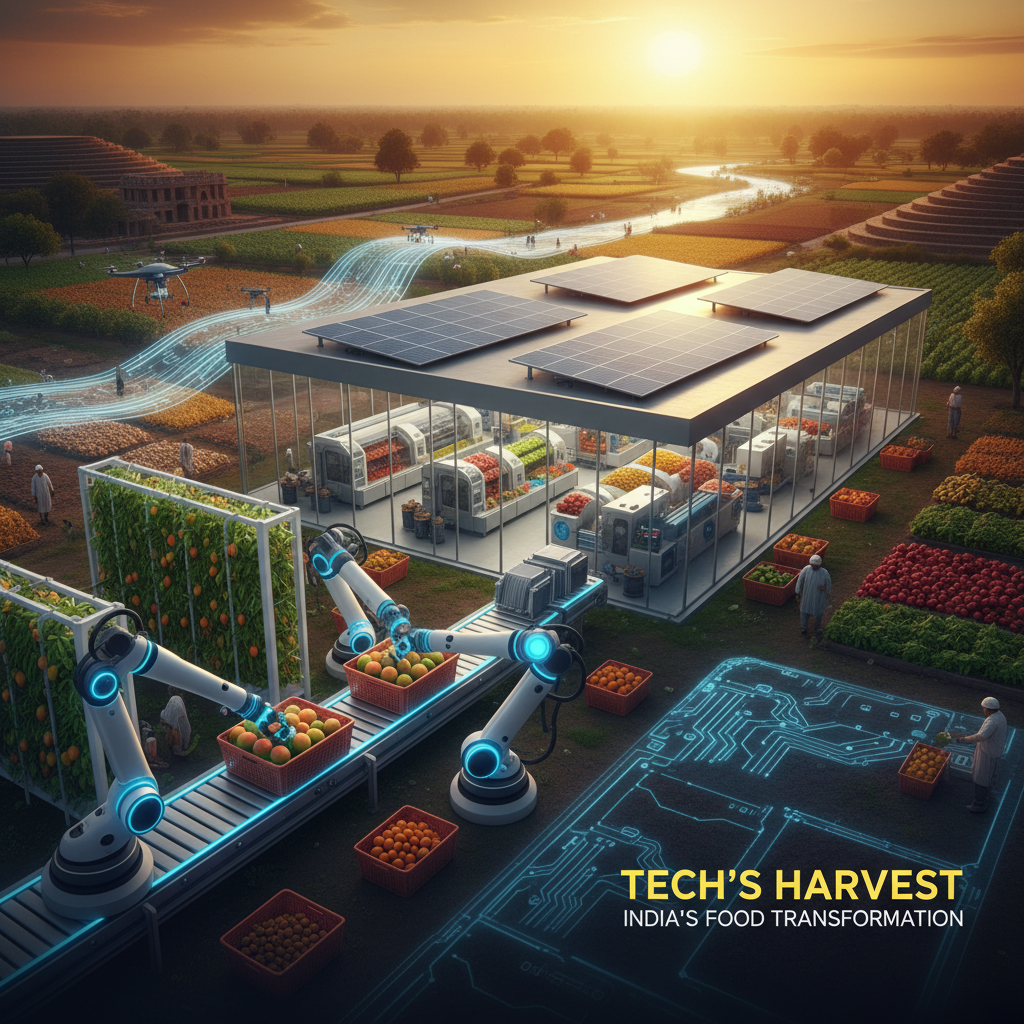
India’s food industry and agricultural sector are experiencing a remarkable technological evolution. Driven by the need for greater transparency, efficiency, and sustainability, digital tools are reshaping how food is produced, tracked, and consumed. This transformation, as highlighted by sources like the Industry-Economic Times and Inc42 Media, is not just about adopting new gadgets; it’s about fundamentally changing the relationship between farmers, businesses, and consumers.
The Rise of Traceability: Building Trust with Data
One of the most significant changes is the implementation of traceability systems, particularly through the use of QR codes. These codes are becoming ubiquitous on food products, providing consumers with a direct link to verifiable information about the food’s journey. This data-driven approach fosters trust by offering insights into the origin, processing, and handling of food items. This is a crucial shift in a market where consumers are increasingly demanding transparency.
The benefits extend beyond the consumer. Farmers are finding that traceability reduces their reliance on intermediaries, leading to improved efficiency and potentially higher profits. Businesses also benefit, as verifiable data helps to minimize disputes and streamline operations. The ability to track food from farm to table is, therefore, a win-win for all stakeholders.
IoT and Precision Farming: Optimizing Resources
Beyond traceability, the Internet of Things (IoT) is playing a pivotal role in revolutionizing farming practices. Companies like Fyllo are leveraging IoT and precision weather forecasts to empower farmers with the data they need to make informed decisions. This allows farmers to optimize resource use, reduce waste, and improve yields. By providing real-time insights into environmental conditions and crop health, these technologies enable a more targeted and efficient approach to agriculture.
A prime example of the impact of these technologies is the experience of Vijaysingh Kachare, who was able to reduce the number of watering cycles through the use of precision farming techniques. This not only conserves water, a precious resource, but also reduces operational costs and enhances the overall sustainability of farming practices. Such examples underscore the practical benefits of embracing technology in agriculture.
The Future of Food in India
The technological transformation of India’s food industry and agriculture is still in its early stages, but the potential is enormous. As digital tools become more sophisticated and accessible, we can expect to see further improvements in efficiency, sustainability, and transparency. This shift is not just about adopting new technologies; it’s about building a more resilient and sustainable food system that benefits everyone involved. The combination of QR codes, IoT, and precision agriculture is setting the stage for a new era of food production and consumption in India.
Sources:
- Industry-Economic Times
- Inc42 Media
About the Author