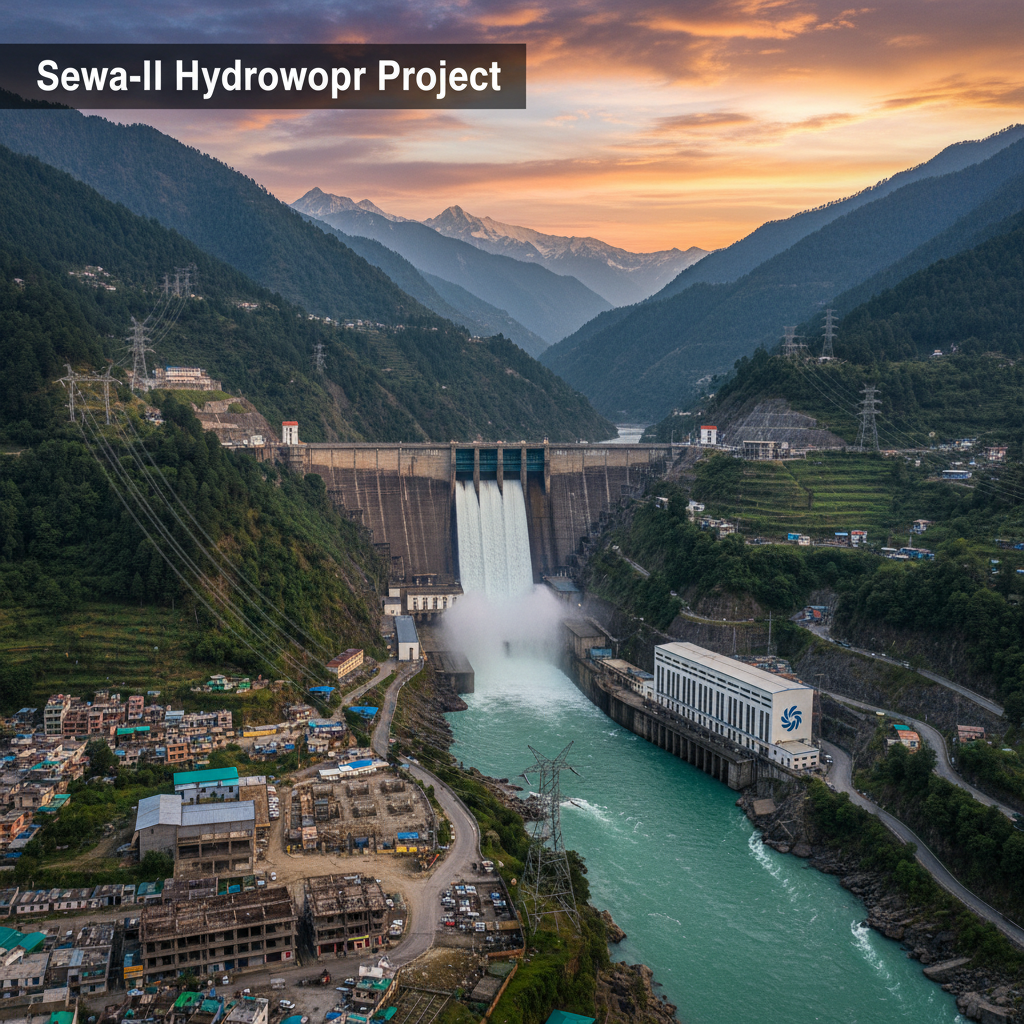
Sewa-II Hydropower Project Fuels J&K’s Economy, Generates Billions
The Sewa-II hydropower project in Kathua, Jammu and Kashmir, stands as a significant contributor to the region’s economy. According to recent reports, this project has generated an impressive ₹3,674 crore in revenue since July 2010. This substantial financial achievement highlights the project’s importance and its impact on the energy landscape of Jammu and Kashmir. The Chief Minister of Jammu and Kashmir likely views this as a positive development, given the project’s contribution to the region’s financial health.
Operational Overview and Financial Impact
The National Hydroelectric Power Corporation (NHPC) operates the Sewa-II hydropower project. While the project has been a significant revenue generator, it is crucial to understand the allocation of these funds. Notably, no direct expenditure on local area development (LAD) has been met from this revenue. Instead, the focus has been on leveraging the generated power to benefit the consumers of Jammu and Kashmir. The project’s financial model prioritizes providing affordable electricity to the residents.
Key Financial Figures and Strategic Use
A key aspect of the Sewa-II project’s financial strategy involves the allocation of 13% free power. This allocation includes the Local Area Development Fund (LADF), which is then utilized by Jammu and Kashmir. The strategic use of this free power is primarily to cover power purchase costs, thereby ensuring reasonable electricity rates for consumers. This approach underscores the project’s commitment to both revenue generation and consumer welfare. The policy ensures that the benefits of the hydropower project are directly felt by the local population.
Policy and Sectoral Implications
The Sewa-II hydropower project exemplifies the synergy between infrastructure development, energy policy, and economic growth in Jammu and Kashmir. The project’s success underscores the importance of hydropower in meeting energy demands while also contributing to the financial well-being of the region. The utilization of free power to offset costs and maintain affordable electricity rates reflects a strategic approach to balancing economic and social objectives. The project’s operational model serves as a case study for similar initiatives in the energy sector.
Broader Sectoral Impact and Future Prospects
The revenue generated by the Sewa-II power plant has a broader impact on the energy sector. It supports the infrastructure of Jammu and Kashmir, and also contributes to the overall stability of the power grid. The success of this project could encourage further investment in hydropower projects across the region. As the demand for electricity continues to grow, the Sewa-II project’s contribution becomes increasingly vital. The Jammu and Kashmir government, with the support of NHPC, is likely to continue focusing on the strategic management of this resource.
Conclusion
The Sewa-II hydropower project’s success story, as highlighted by the revenue generated since 2010, is a testament to the effective interplay of infrastructure development and strategic policy. The project’s operational model, managed by NHPC, ensures that the benefits of power generation extend to the consumers in Jammu and Kashmir, through affordable electricity rates. This initiative not only boosts the economy but also sets a precedent for sustainable energy practices in the region. The project’s focus on providing 13% free power, including the LADF, demonstrates a commitment to both financial sustainability and community welfare.
About the Author