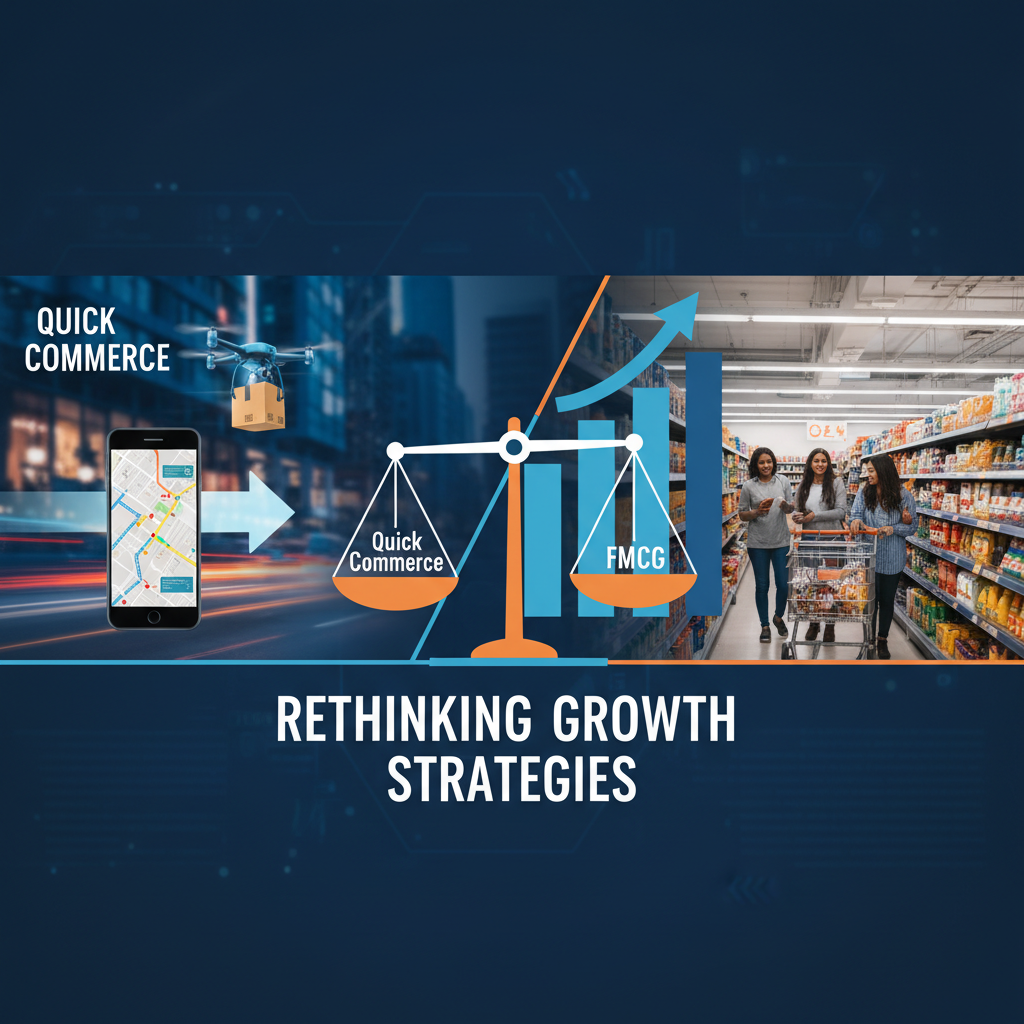
The question on everyone’s mind in the FMCG sector right now: How do you compete with speed? Quick commerce, once a niche, is rapidly becoming a daily shopping feature, and the established players are taking notice. It’s a fundamental shift, and the numbers are starting to reflect that.
At the heart of the matter is convenience. Consumers want their goods, and they want them now. This is where companies like HUL, Marico, Britannia, and Tata Consumer find themselves, facing a new reality. They’re not just competing with each other anymore; they’re up against a whole new set of rules.
As per reports, the shift is undeniable. The speed of delivery, the ease of ordering – it’s all part of the allure. This is forcing a rethink of growth strategies, a scramble to adapt to changing consumer behaviors. The old models, the established distribution networks, the tried-and-true marketing campaigns — they’re all being re-evaluated, and it’s happening fast.
It’s not just about speed, though. It’s about data, too. Quick commerce platforms have a wealth of information about consumer preferences, allowing them to tailor offerings in real time. Legacy FMCG companies, on the other hand, are often playing catch-up, trying to glean insights from traditional market research methods. Or at least, that’s what it looks like.
A recent analysis from a market research firm suggests that the quick commerce market is poised for significant expansion over the next few years. That creates a lot of pressure.
“The challenge for legacy FMCG companies is not just to enter the quick commerce space, but to integrate it seamlessly into their existing operations,” an industry analyst said in a recent interview. “It requires a fundamental shift in mindset, a willingness to embrace new technologies, and a deep understanding of consumer behavior.”
And, of course, the bottom line. Adapting to quick commerce isn’t cheap. It requires investment in logistics, technology, and marketing, all while trying to maintain profitability. It’s a delicate balancing act, to say the least.
The pressure is on. The sound of analysts tapping away at spreadsheets, the muted chatter of conference calls, the air in the room, it all feels tense. Legacy FMCG players are now figuring out how to survive in a world where speed is the new currency.
About the Author