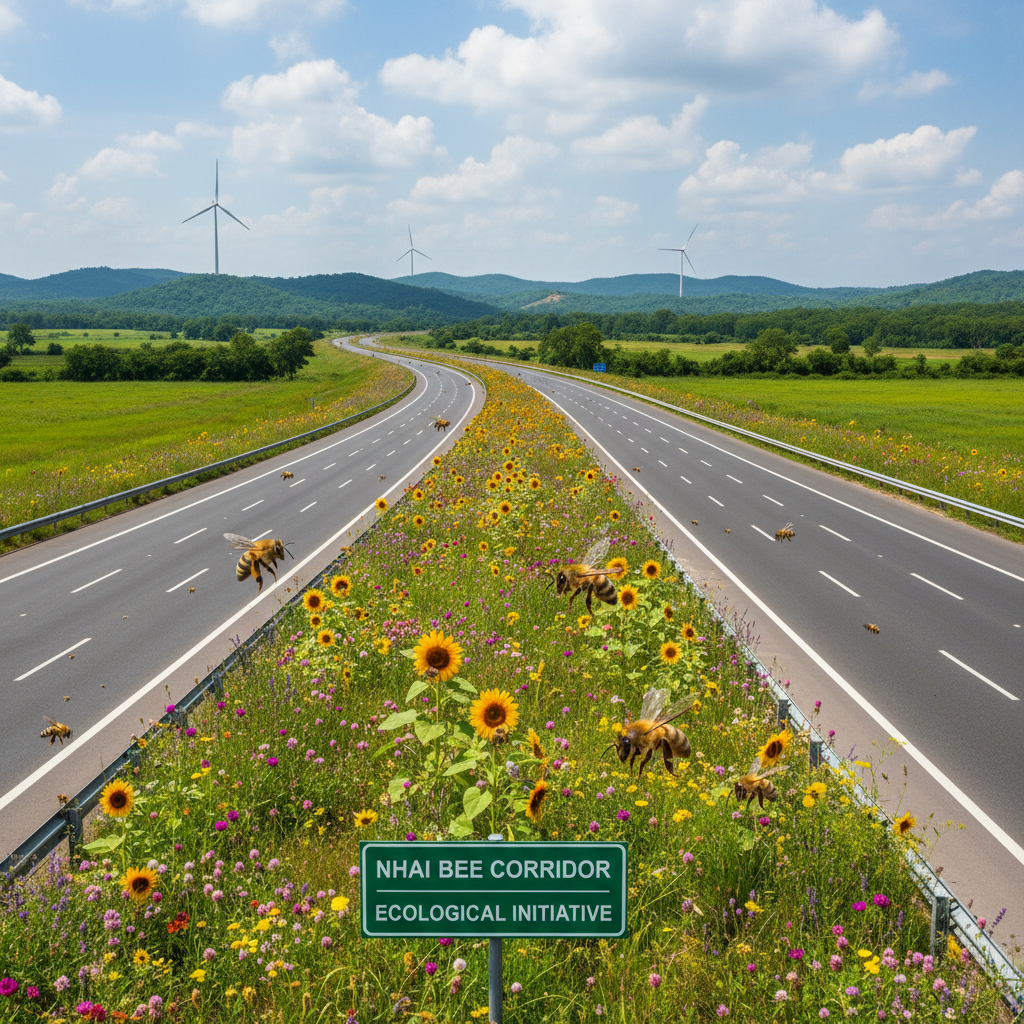
NHAI to Cultivate ‘Bee Corridors’ for Ecological Harmony Along Highways
In a forward-thinking move, the National Highways Authority of India (NHAI) is set to embark on a significant environmental initiative. The plan involves the development of ‘Bee Corridors’ along National Highways, a project aimed at bolstering ecological balance and supporting agricultural productivity. This announcement, made by the ministry of road transport and highways, underscores a commitment to sustainable infrastructure development.
The Genesis of the ‘Bee Corridor’ Initiative
The core objective of the ‘Bee Corridor’ initiative is to mitigate the increasing ecological stress faced by honeybees and other pollinators. The ministry of road transport and highways recognizes that these pollinators are crucial for pollination services. Their decline adversely impacts agricultural and horticultural productivity, as well as the overall ecological balance. By creating these corridors, NHAI aims to provide habitats and safe passage for pollinators, thereby supporting their populations and the vital services they provide.
Key Components and Implementation Timeline
The program is ambitious in scope. NHAI plans to develop at least three pollinator corridors during 2026–27. Furthermore, a substantial portion of the trees planted along National Highways will be integrated into the initiative. Specifically, 60% of the approximately 40 lakh trees planted during 2026–27 will fall under the ‘Bee Corridor’ initiative. This large-scale planting will create a network of habitats that support pollinator populations and enhance biodiversity along roadways. The initiative highlights a proactive approach to environmental stewardship within infrastructure projects.
Environmental and Economic Benefits
The benefits of the ‘Bee Corridor’ initiative extend beyond mere environmental conservation. By supporting pollinators, NHAI is indirectly contributing to enhanced agricultural and horticultural productivity. Healthy pollinator populations are essential for crop pollination, ensuring higher yields and improved quality of produce. This, in turn, can have a positive impact on the livelihoods of farmers and the overall economy. The initiative thus represents an integrated approach to sustainable development, balancing infrastructure growth with environmental preservation.
Strategic Significance and Future Implications
The decision by NHAI to implement ‘Bee Corridors’ along National Highways reflects a growing recognition of the importance of ecological considerations in infrastructure development. This policy shift sets a precedent for future projects. It encourages a holistic approach to planning and execution. As the project unfolds, it will be crucial to monitor its impact on pollinator populations, agricultural productivity, and overall ecological health. The success of this initiative could serve as a model for other infrastructure projects, demonstrating how environmental sustainability and economic growth can be pursued in tandem.
Source: Industry-Economic Times
About the Author