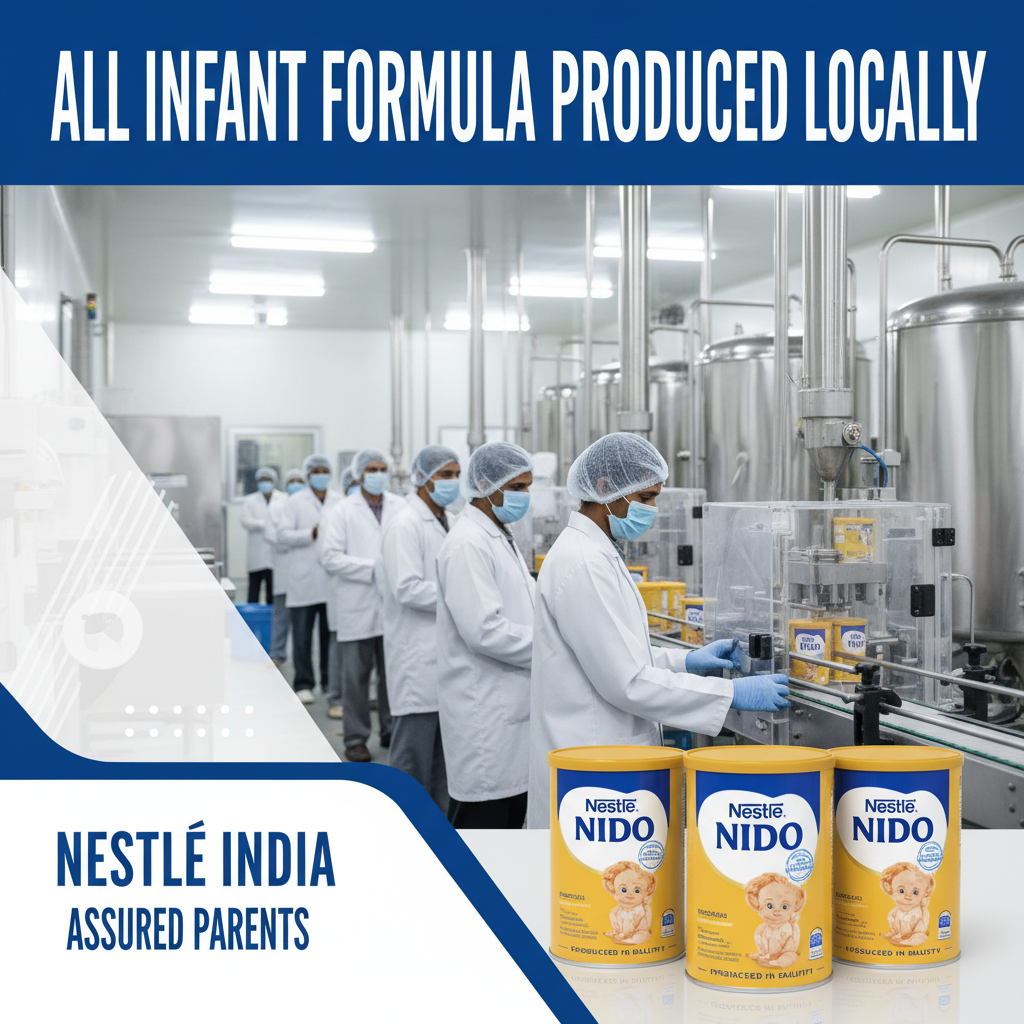
Nestle India Assures Parents: All Infant Formula Produced Locally
In a move designed to reassure parents, Nestle India has confirmed that its complete range of infant formula brands are produced locally. This announcement addresses growing concerns about the safety and origin of baby milk products, particularly in light of recent international investigations into contamination. The company’s commitment to local production of key brands such as Nan Pro, Lactogen, and Nan Grow underscores its dedication to the Indian market and its consumers.
Local Production: A Reassuring Step
The decision to produce all infant formula locally is a significant one. In the context of global scrutiny of food safety, local production offers several advantages. It allows for greater oversight of the manufacturing process, potentially reducing the risk of contamination and ensuring that products meet the highest standards of quality. Nestle India’s move is particularly pertinent given the recent international investigations into baby milk contamination, which have heightened the vigilance of parents and regulatory bodies alike. This proactive step demonstrates Nestle India’s commitment to the well-being of its consumers, specifically the parents who rely on their products.
The WHO (World Health Organization) and other international bodies have consistently emphasized the importance of food safety. Nestle India’s emphasis on local production aligns with these global standards, providing an added layer of assurance for parents in India. The company’s transparency in declaring its manufacturing processes further builds trust, a critical factor in the competitive infant formula market.
Focus on Key Brands: Nan Pro, Lactogen, and Nan Grow
Nestle India’s local production encompasses its primary infant formula offerings: Nan Pro, Lactogen, and Nan Grow. These brands are staples in many Indian households and are trusted by parents across the country. By manufacturing these products within India, Nestle India can potentially streamline its supply chain, reduce transportation times, and ensure that the products reach consumers efficiently. This localized approach also allows the company to better respond to the specific needs and preferences of the Indian market.
Why Local Production Matters
The rationale behind this move is multifaceted. Firstly, it provides reassurance to parents who are increasingly concerned about the safety of infant formula. Secondly, it allows Nestle India to maintain greater control over its manufacturing processes, ensuring that products adhere to stringent quality standards. Thirdly, it demonstrates the company’s commitment to the Indian market, signaling its long-term investment in the country and its consumers. The local production of these essential products is, therefore, a strategic move that benefits both the company and the parents who depend on its products.
Conclusion
Nestle India’s decision to produce its infant formula brands locally is a positive development for parents and the Indian market. By emphasizing local production of brands like Nan Pro, Lactogen, and Nan Grow, the company is taking a proactive step to address concerns about food safety and reinforce its commitment to quality. This move not only reassures parents but also aligns with the global emphasis on ensuring the safety of infant nutrition products. As the WHO and other organizations continue to advocate for rigorous food safety standards, Nestle India’s commitment sets a positive example for the food processing sector.
About the Author