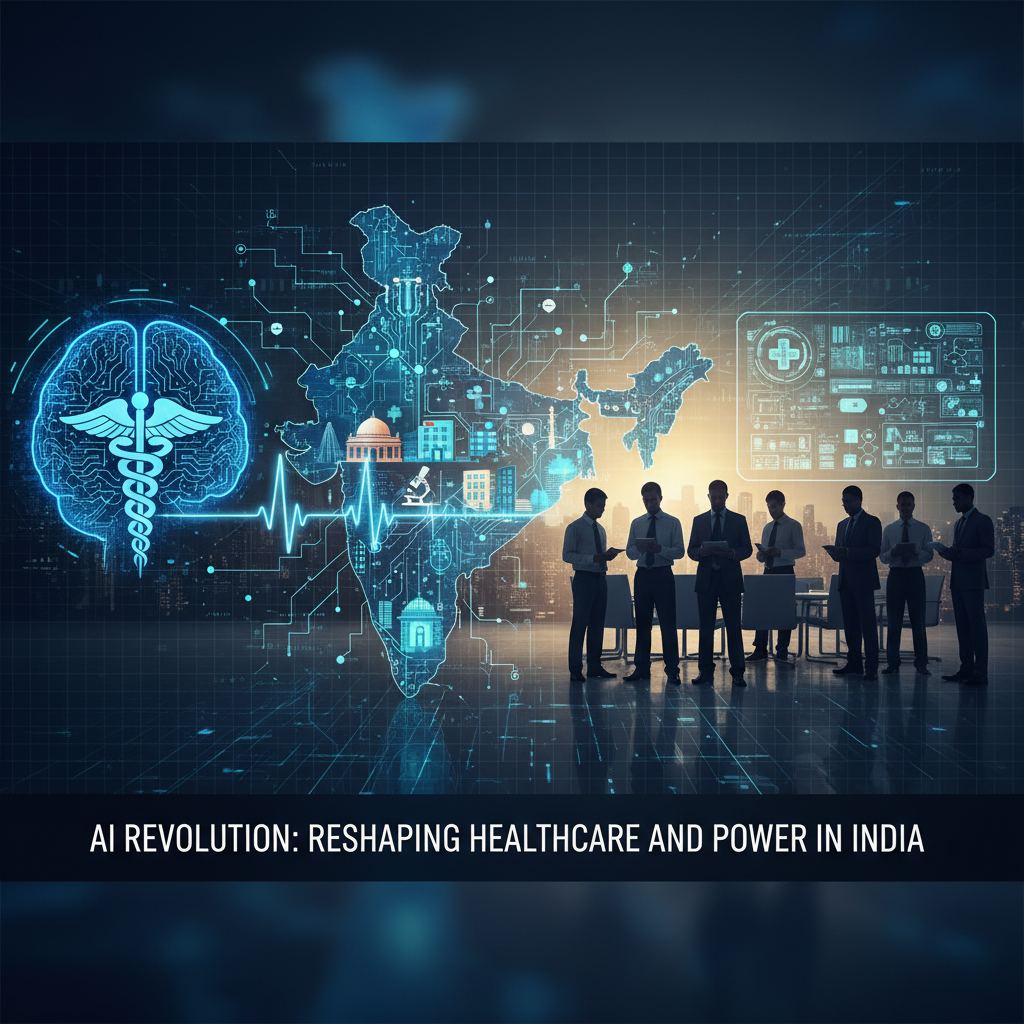
AI Applications Poised to Transform Healthcare and Power Sectors in India
Artificial intelligence (AI) is rapidly emerging as a transformative force across various sectors in India, with particularly significant implications for healthcare and the power industry. The potential of AI to drive innovation and address critical challenges was recently underscored at the AI Impact Summit. This article delves into the specific applications and benefits of AI within these key sectors, drawing on insights from industry leaders and experts.
AI’s Role in Healthcare: Addressing Inequities and Enhancing Efficiency
The healthcare sector in India stands to gain immensely from the integration of AI. Union MoS Health Anupriya Patel, speaking at the AI Impact Summit, highlighted the crucial role AI can play in addressing health inequities and advancing the nation’s goals of inclusivity and health equity. Patel emphasized that while AI offers powerful tools, it is not intended to replace human interaction, but rather to augment and improve healthcare delivery. The focus is on leveraging AI to create more accessible, efficient, and equitable healthcare solutions for all citizens.
AI’s capabilities in healthcare extend to several areas, including:
- Diagnosis and Treatment: AI algorithms can analyze medical images, such as X-rays and MRIs, to assist in the early and accurate diagnosis of diseases. This can lead to more timely and effective treatments.
- Personalized Medicine: AI can analyze patient data to create personalized treatment plans, optimizing outcomes based on individual needs and health profiles.
- Predictive Analytics: AI can predict potential health risks and outbreaks, allowing healthcare providers to take proactive measures and allocate resources efficiently.
Powering the Future: AI in the Indian Power Sector
The power sector in India is also on the cusp of a major transformation, with AI playing a central role. Experts from the International Energy Agency (IEA) recognize that AI integration is essential for managing the increasing complexities within the power sector, particularly with the growing adoption of renewable energy sources. The ability of AI to enhance the prediction of solar and wind power generation through continuous real-time analysis is a critical aspect of this transformation.
The advantages of AI in the power sector include:
- Predictive Maintenance: AI can analyze data from power grids and equipment to predict potential failures, allowing for proactive maintenance and reducing downtime.
- Optimized Energy Distribution: AI algorithms can optimize the distribution of electricity, ensuring efficient use of resources and reducing waste.
- Integration of Renewables: AI can help manage the intermittent nature of renewable energy sources like solar and wind, ensuring a stable and reliable power supply.
The Path Forward: Policy and Implementation
The integration of AI in healthcare and the power sector requires a strategic approach that includes supportive policies, investment in infrastructure, and the development of skilled professionals. The Indian government is actively promoting AI adoption through various initiatives, recognizing its potential to drive economic growth and improve the quality of life for its citizens. Collaboration between government, industry, and academia will be crucial to realize the full potential of AI.
As India moves forward, it is essential to address ethical considerations, data privacy, and cybersecurity risks associated with AI. Robust regulatory frameworks and standards are needed to ensure the responsible and sustainable use of AI technologies. The focus should be on harnessing the power of AI to create a more inclusive, efficient, and resilient future for India.
In conclusion, AI is not just a technological advancement; it is a catalyst for change, poised to reshape the healthcare and power sectors in India. With careful planning, strategic implementation, and a commitment to ethical practices, India can unlock the full potential of AI and build a brighter future for all. As Union MoS Health Anupriya Patel and IEA experts have pointed out, AI’s role is not to replace human interaction, but to enhance it, ensuring that technology serves humanity’s best interests.
About the Author