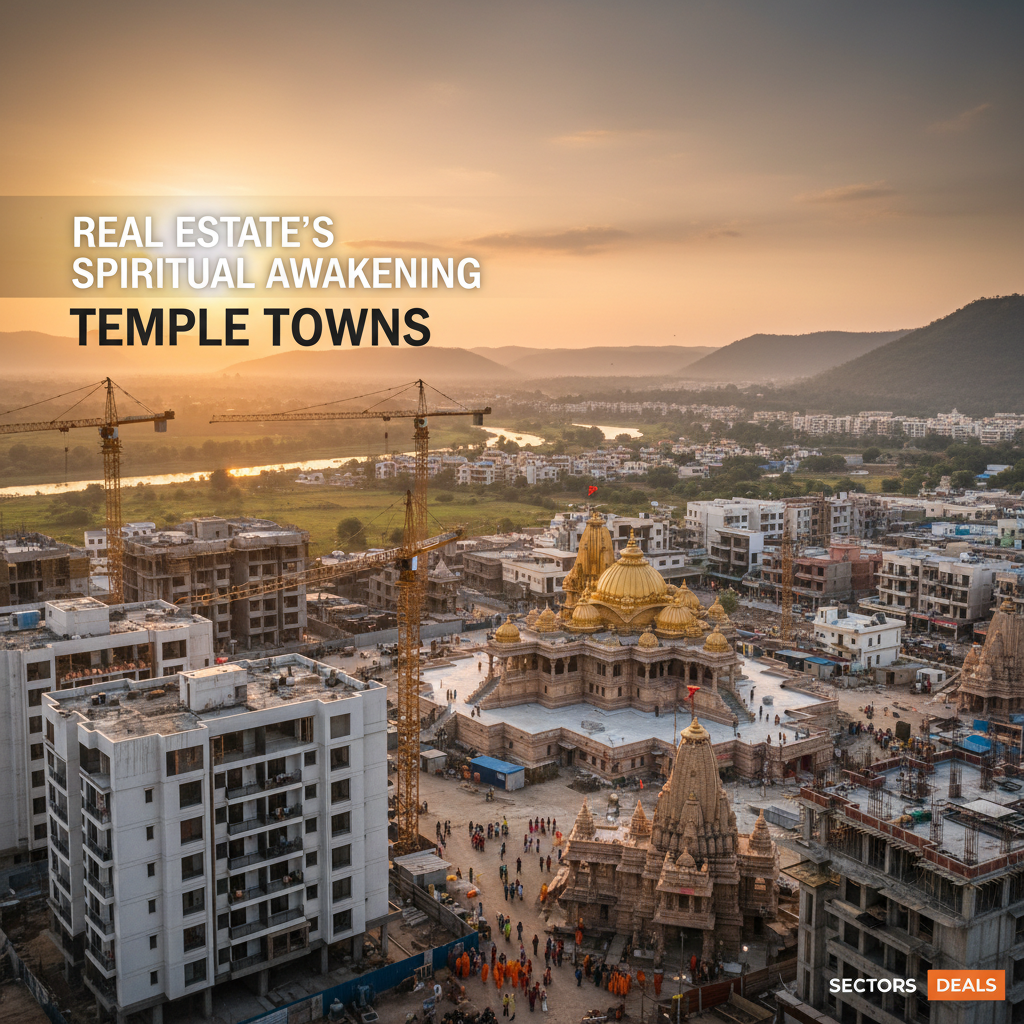
Real Estate’s Spiritual Awakening: Developers Bet on Temple Towns
In a fascinating intersection of faith and finance, real estate developers are increasingly turning their attention to India’s temple towns. Fueled by a surge in religious tourism and supported by government initiatives, these developers are making strategic investments in locations like Ayodhya and Vrindavan. The expectation is that these investments will capitalize on the growing demand for various real estate sectors. This trend signifies a notable shift, as developers recognize the potential of spiritual hubs as lucrative markets.
Ayodhya and Vrindavan: The New Real Estate Hotspots
The cities of Ayodhya and Vrindavan, steeped in religious significance, are now witnessing a real estate boom. The primary driver behind this growth is the rise in religious tourism. As more pilgrims and tourists visit these sacred sites, the demand for accommodation, retail spaces, and residential properties is surging. This has created an attractive environment for developers to invest and build.
The Government’s role in promoting religious tourism is also crucial. Initiatives aimed at improving infrastructure and accessibility are making these locations more appealing to visitors. Improved transportation, better amenities, and enhanced facilities are collectively attracting more tourists. This, in turn, boosts the real estate sector by creating a conducive environment for investment and development. The Economic Times notes that experts foresee significant development in these spiritual hubs in the coming years, indicating a long-term investment opportunity.
Anticipated Growth Across Real Estate Sectors
The investment in temple towns is expected to have a ripple effect across various real estate sectors. The most immediate impact is the demand for new hotel rooms. As the number of tourists increases, so does the need for quality accommodations. This creates opportunities for hotel developers and investors. Alongside hotels, there is a growing need for retail spaces to cater to the needs of tourists and pilgrims. This includes shops selling religious items, souvenirs, and everyday necessities.
Residential properties are also expected to see a rise in demand. As these towns develop, they become attractive places to live, leading to an increase in residential projects. This diversification of real estate offerings ensures a balanced and sustainable growth model. The anticipated growth is not limited to these sectors alone. Related industries such as construction, hospitality services, and local businesses are also set to benefit from this real estate surge.
Strategic Investments and Future Prospects
The investment strategy of developers in temple towns is multifaceted. It involves acquiring land, developing infrastructure, and building properties that cater to the specific needs of tourists and residents. This requires a deep understanding of the local market, the cultural context, and the long-term growth potential. Developers are not just building structures; they are creating spaces that blend modern amenities with the traditional essence of these sacred towns.
Looking ahead, the prospects for real estate in Ayodhya, Vrindavan, and other temple towns appear promising. The continuous influx of tourists, combined with supportive government policies, provides a strong foundation for sustainable growth. As these spiritual hubs evolve, they are poised to become significant centers of real estate investment, offering diverse opportunities for developers and investors alike. The trend highlights the adaptability of the real estate sector and its ability to identify and capitalize on emerging opportunities.
In conclusion, the strategic shift of real estate developers towards temple towns like Ayodhya and Vrindavan is a testament to the evolving dynamics of the Indian real estate market. This trend, driven by religious tourism and government support, is expected to generate significant growth across various sectors. As these towns continue to develop, they offer a compelling investment landscape, blending spiritual significance with promising financial returns. This represents a remarkable fusion of faith, development, and economic opportunity, setting the stage for a new chapter in the real estate sector. (Source: Industry-Economic Times)
About the Author