
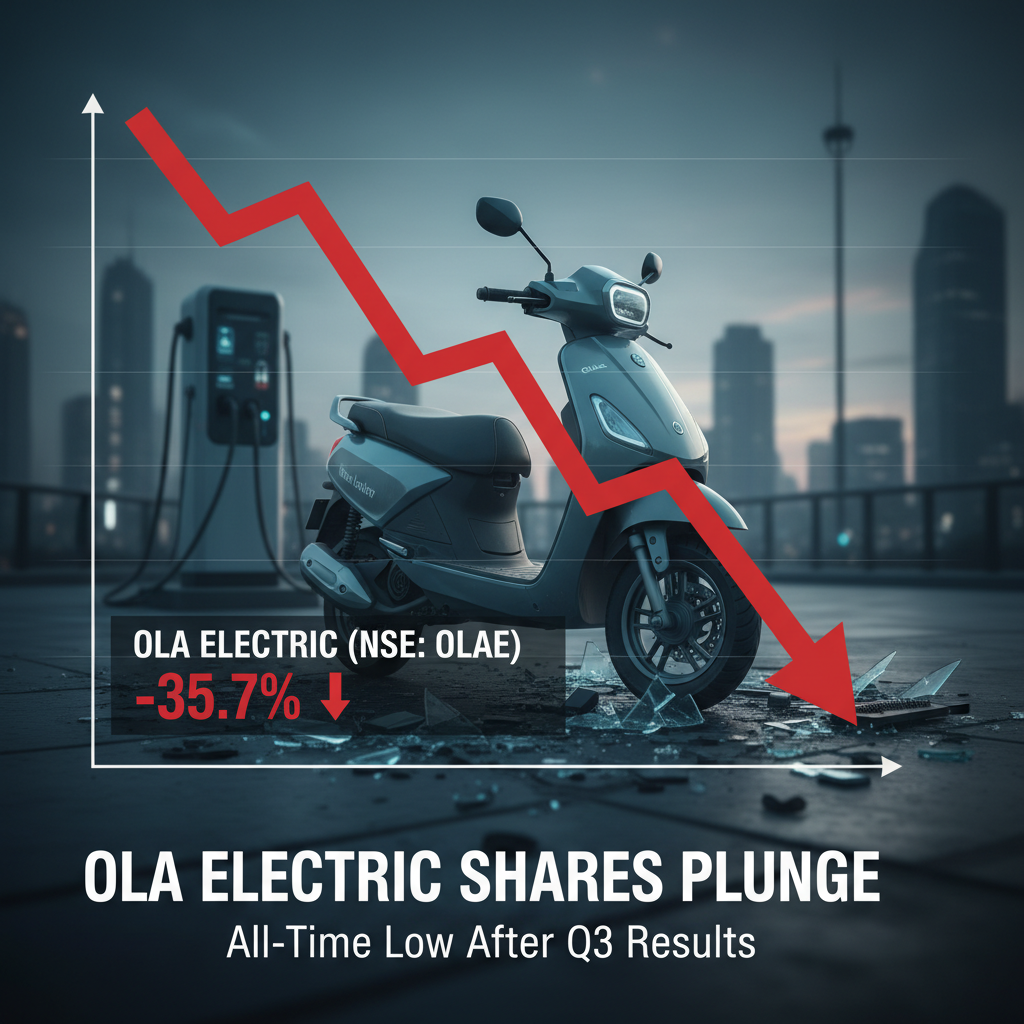
Ola Electric Shares Hit All-Time Low After Q3 Results
The automotive industry and stock market watchers are closely observing the recent performance of Ola Electric. The EV manufacturer’s shares experienced a significant downturn, hitting an all-time low during intraday trading. This development follows the release of the company’s Q3 results, prompting a deeper look into the factors influencing this market reaction.
Market Performance and Intraday Trading
During intraday trading, Ola Electric shares fell sharply, reaching an all-time low of ₹28.73. This decline represents a notable shift in the stock’s valuation, sparking discussions among investors and market analysts. The movement of shares during intraday trading is often influenced by immediate market reactions to company announcements, economic indicators, and investor sentiment. In this instance, the Q3 results appear to have triggered a negative response, leading to the share price drop.
Q3 Results and Financial Performance
The core reason behind the share price fall is directly linked to the Q3 results. Financial performance metrics, such as revenue, profit margins, and overall profitability, play a critical role in shaping investor confidence. Poor results can lead to a sell-off, as investors reassess their holdings and adjust their expectations for the company’s future growth. A detailed analysis of Ola Electric’s Q3 results is essential to understand the specific financial challenges that triggered the market’s negative response. This includes evaluating the company’s performance within the competitive EV market.
Impact on the Automotive Industry
Ola Electric’s performance is not isolated; it reflects broader trends within the automotive industry, particularly the rapidly evolving EV sector. The company’s struggles can influence investor sentiment toward other EV manufacturers and impact the overall valuation of the automotive sector. Factors such as supply chain issues, changing consumer preferences, and government policies also play a significant role in shaping the industry landscape. The recent share price drop serves as a reminder of the inherent risks and volatility within the automotive industry, especially for new and rapidly growing segments like EVs. The performance of Ola Electric is thus crucial for understanding the health and future trajectory of the automotive industry.
Market Analysis and Future Outlook
Market analysis provides insights into the factors driving the share price decline. This includes examining investor behavior, trading volumes, and the overall market sentiment toward Ola Electric. Looking ahead, the company’s strategies for addressing the Q3 challenges will be critical. This involves evaluating its plans for product development, market expansion, and financial management. The ability of Ola Electric to navigate these challenges will determine its future performance and its ability to regain investor confidence. The long-term outlook for Ola Electric depends on its ability to adapt to market dynamics and execute its strategic plans effectively.
Conclusion
The drop in Ola Electric’s shares to an all-time low following the Q3 results highlights the dynamic nature of the stock market and the automotive industry. The company’s future performance will depend on its ability to address the financial challenges and adapt to the changing market conditions. Investors and industry observers will continue to monitor Ola Electric’s progress, assessing its strategic initiatives and financial performance in the coming quarters. The market’s reaction underscores the importance of financial performance and strategic planning in maintaining investor confidence and achieving long-term success.
About the Author




![[A descriptive alt text for accessibility, max 125 characters]](https://globalsouthcapitaltimes.sortd.pro/wp-content/uploads/sites/7/2026/03/image-1772650928443-768x768.png)