India’s Trade Deficit Widens in January Amidst Surging Imports
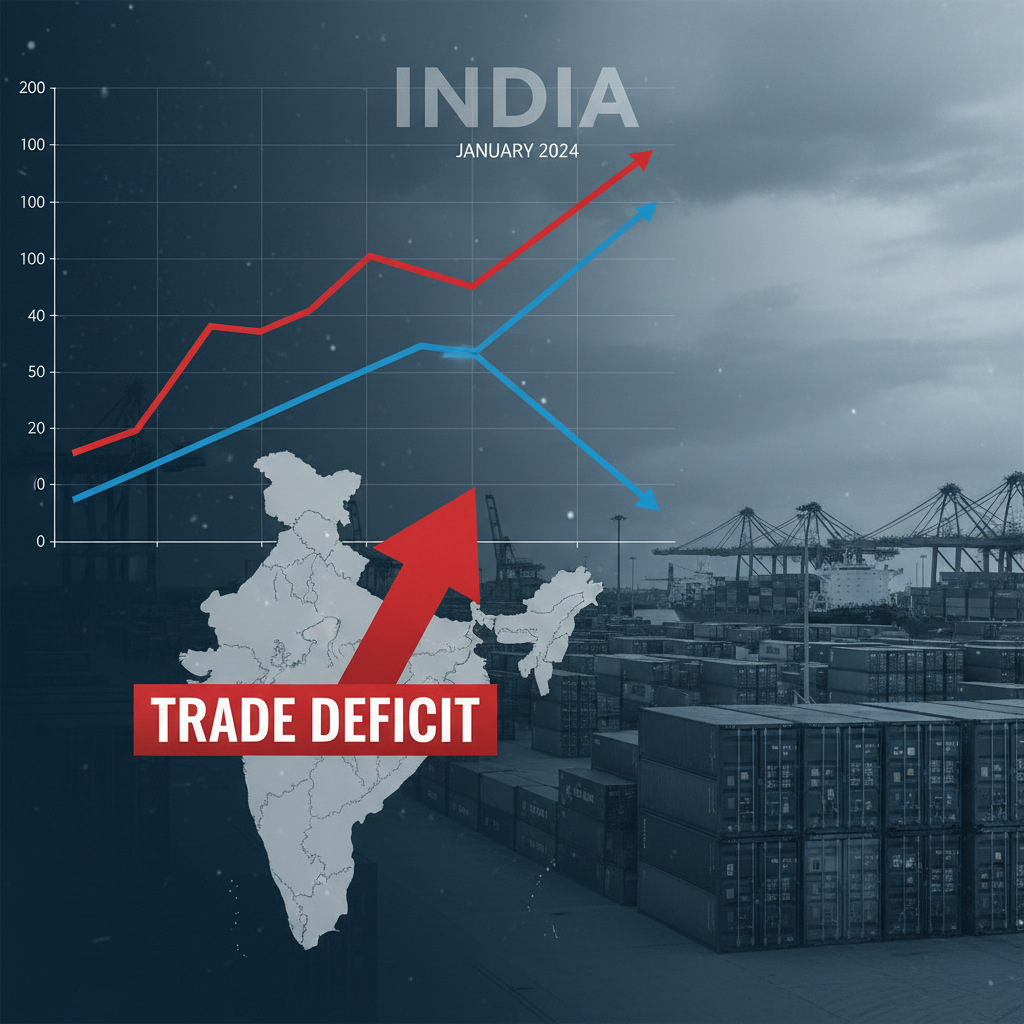
The Indian economy faced a challenging start to the year as the trade deficit significantly expanded in January. According to recent reports, the deficit reached $34.68 billion, a figure driven by a notable increase in imports. This development signals potential headwinds for India’s economic outlook, particularly within the context of global economic uncertainties.
Imports Surge, Exports Stall
A key factor contributing to the widening trade gap was the surge in imports. Overall, imports rose by 19% during January. This increase was substantially influenced by higher inflows of gold and silver. While these commodities are often seen as indicators of domestic demand, their impact on the trade balance is significant. At the same time, merchandise exports experienced only a modest increase of 0.6%. This slow growth in exports is a cause for concern and reflects the broader challenges posed by global economic uncertainties. The sluggish export performance suggests that India’s manufacturers and exporters are navigating a difficult international landscape, where demand may be softening in key markets.
The Role of Global Economic Uncertainties
The backdrop of global economic uncertainties plays a crucial role in understanding these trade dynamics. Factors such as fluctuating commodity prices, geopolitical tensions, and shifts in consumer demand across the world all contribute to the volatility in international trade. These uncertainties make it difficult for economies like India to predict and manage their trade flows effectively. As a result, the widening trade deficit in January is a reflection of these external pressures and their impact on India’s economic performance. The global trade environment is becoming increasingly complex, requiring proactive strategies from policymakers and businesses alike to mitigate the risks associated with these uncertainties.
Implications and Outlook
The January trade figures have several implications for India’s economic trajectory. A persistent and widening trade deficit can put pressure on the country’s currency, potentially leading to inflation and affecting the overall macroeconomic stability. Moreover, a slowdown in exports could hamper economic growth, as export-oriented industries contribute significantly to job creation and economic activity. Looking ahead, policymakers will likely need to focus on strategies to boost exports, diversify trade partners, and manage import costs effectively. This may involve initiatives to support domestic manufacturing, streamline trade procedures, and negotiate favorable trade agreements with key partners. The goal is to ensure that India remains competitive in the global market while maintaining a sustainable trade balance. The situation will continue to be monitored closely as the year unfolds, with adjustments made as needed to navigate the ever-changing global economic landscape.
Source: Business Standard
About the Author