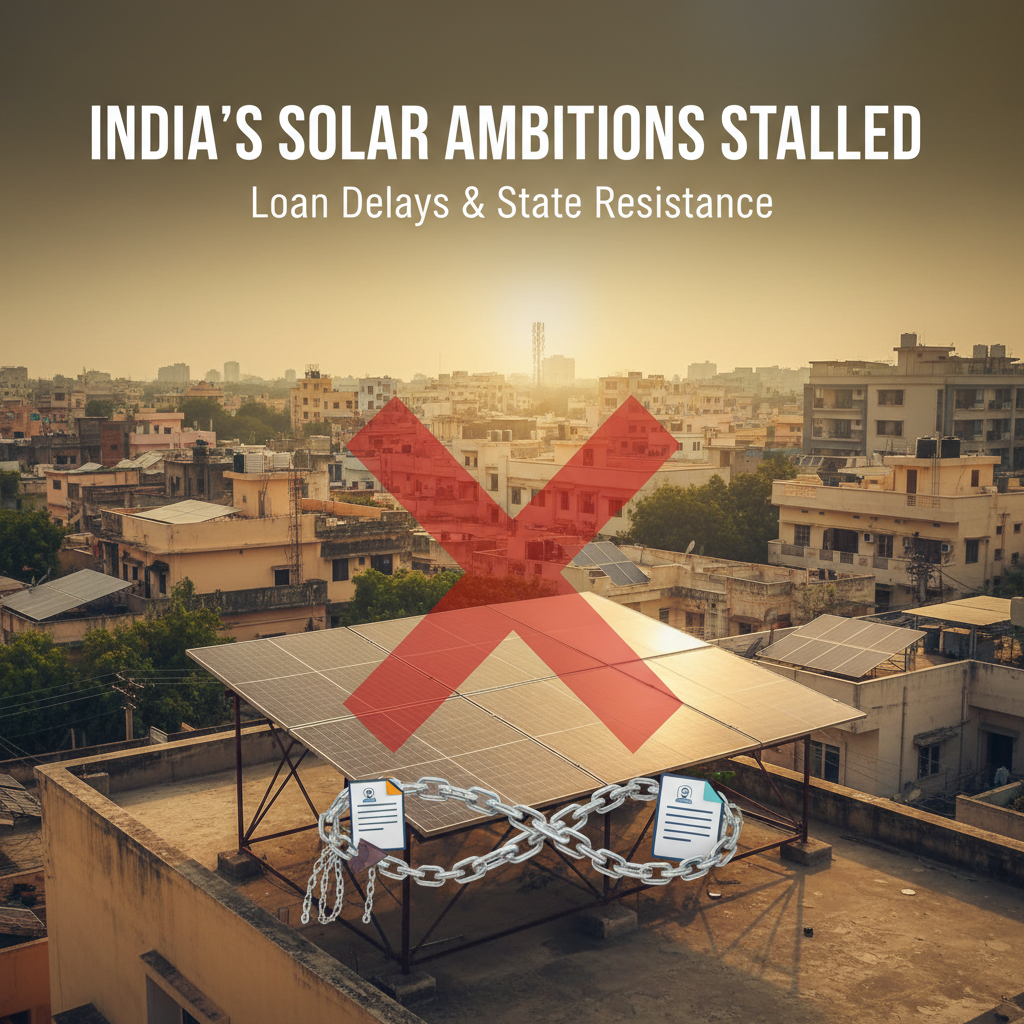
India’s Rooftop Solar Ambitions Stalled: Loan Delays and State Resistance
India’s push for widespread rooftop solar adoption, championed by PM Modi, is encountering significant obstacles, threatening the nation’s clean energy objectives. A recent report highlights that several factors, including financial institutions’ hesitancy in providing loans and state utilities’ reluctance to actively promote the scheme, are hindering the program’s progress. This situation casts a shadow on India’s commitment to reducing its reliance on fossil fuels and achieving its ambitious renewable energy targets.
Loan Delays and Financial Barriers
One of the primary roadblocks to the rooftop solar program’s success is the issue of loan rejections and delays by banks. Many applicants are finding it difficult to secure timely financing, which is crucial for the installation of solar panels. These delays can be attributed to various factors, including stringent lending criteria, bureaucratic processes, and a lack of awareness among financial institutions about the benefits of solar energy investments. The slow pace of loan approvals is a major concern, as it directly impacts the rate at which rooftop solar installations can be completed. This, in turn, affects the overall progress towards achieving India’s clean energy goals.
State Utilities’ Reluctance and Policy Challenges
Alongside financial constraints, the state utilities’ reluctance to promote the scheme further complicates the situation. These utilities play a crucial role in facilitating the adoption of rooftop solar by providing necessary infrastructure, ensuring grid connectivity, and offering appropriate incentives. However, in many instances, they have been slow to embrace the program, citing concerns about grid stability, revenue losses, and the complexities of managing distributed generation. This lack of proactive engagement from state utilities is a significant impediment to the program’s expansion, particularly in regions where the utilities hold considerable influence over energy distribution and consumer behavior.
The policy framework surrounding rooftop solar also presents certain challenges. While the central government, led by PM Modi, has set ambitious targets and introduced various incentives, the implementation of these policies often varies across different states. This inconsistency can create confusion among consumers and developers, leading to delays and uncertainties. Streamlining the policy landscape, ensuring consistent enforcement, and providing clear guidelines can significantly accelerate the adoption of rooftop solar across the country.
The Impact on Clean Energy Goals
The combined effect of loan delays and state utilities’ reluctance is a slowdown in rooftop solar installations. This is particularly concerning given India’s commitment to transition to a low-carbon economy and reduce its dependence on coal power. The slow progress in rooftop solar installations may force the country to rely more on fossil fuels, thereby undermining its efforts to combat climate change and meet its international commitments. The current trajectory suggests that India might fall short of its renewable energy targets if these issues are not addressed promptly.
Addressing the Challenges
To overcome these challenges, a multi-pronged approach is needed. Financial institutions must be encouraged to expedite loan approvals and adopt more flexible lending terms for solar projects. State utilities need to become more proactive in promoting the scheme by providing adequate support and resolving grid integration issues. The central government should continue to refine the policy framework, ensuring consistency and clarity across all states. Furthermore, raising awareness among consumers about the benefits of rooftop solar and simplifying the application process can also contribute to accelerating the program’s progress.
The success of India’s rooftop solar program is crucial for achieving its clean energy objectives. Addressing the current hurdles through concerted efforts from financial institutions, state utilities, and the government is essential to ensure that India remains on track to meet its ambitious renewable energy targets and reduce its reliance on fossil fuels.
Source: Industry-Economic Times
About the Author