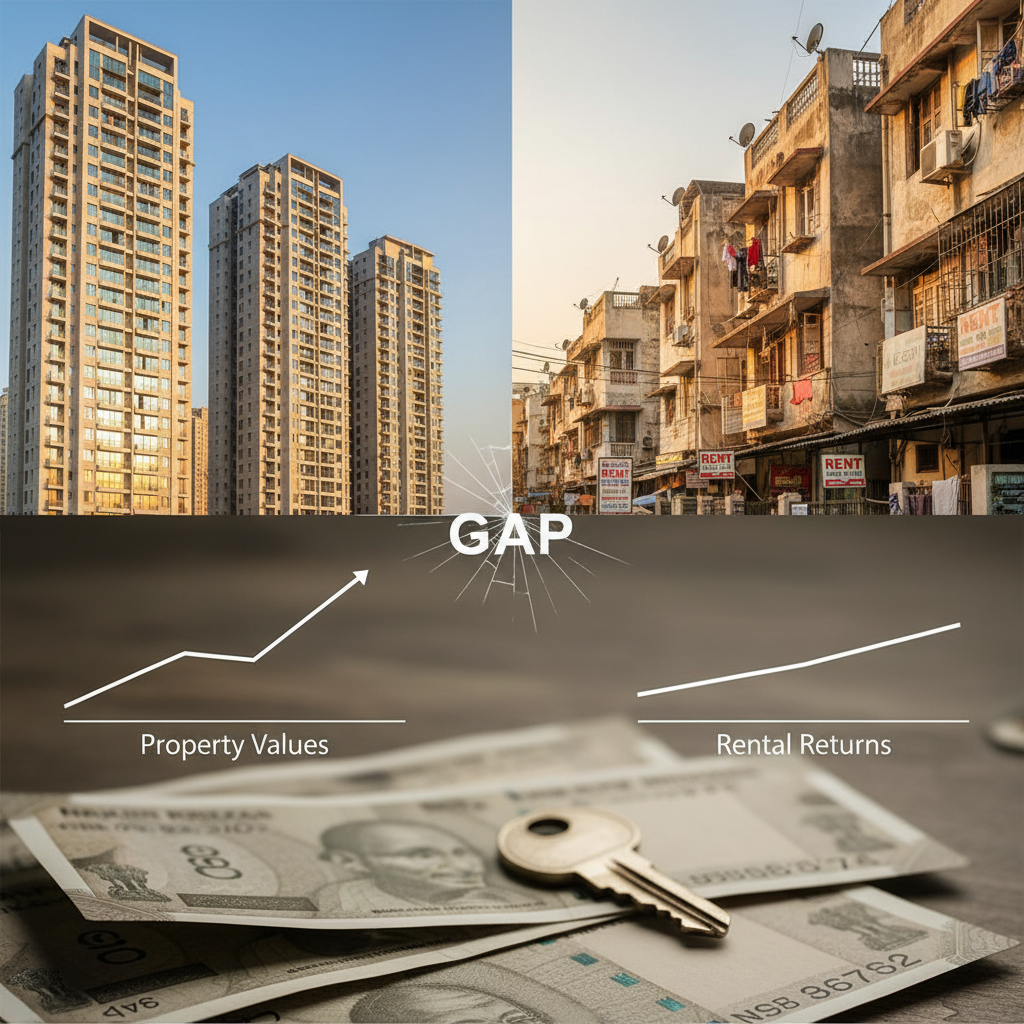
India’s Housing Market: A Widening Gap Between Property Values and Rental Returns
The Indian housing market is currently navigating a period of adjustment. Recent data indicates a growing divergence between the surge in property values and the returns generated from rental income. This shift presents a nuanced picture for investors, tenants, and the overall real estate landscape. This analysis delves into the key trends and factors shaping this evolving market, as highlighted by recent reports from the Economic Times.
Understanding the Dynamics of the Rental Market
The primary observation is the widening gap between capital value growth and rental gains. While property prices continue to rise, the demand for rentals has experienced a dip. This dynamic impacts various stakeholders, from property owners to tenants. This shift can be attributed to several factors, including broader economic trends and evolving tenant preferences.
Key Trends in the Indian Housing Market
Property Prices and Rental Demand
One of the core components of the current market scenario is the increase in property prices across major Indian cities. Simultaneously, there has been a noticeable softening in rental demand. This combination creates a scenario where the returns from rental properties may not keep pace with the increasing capital investment. This is an important consideration for investors aiming to generate income from their real estate holdings.
Rental Yields and Market Stability
Despite the fluctuations in property prices and rental demand, rental yields have remained relatively stable across major Indian cities. This suggests a degree of resilience in the rental market, indicating that it is adjusting to new market realities. This stability is crucial for maintaining investor confidence and ensuring a consistent supply of rental properties.
Tenant Preferences and Housing Choices
Tenant preferences are also playing a significant role in shaping the market. The data suggests a growing preference for mid-sized, semi-furnished homes. This preference reflects a balance between affordability and comfort, catering to the needs of a diverse tenant base. This trend influences the types of properties that are in highest demand and the amenities that are considered essential.
Affordable Rentals and Market Competition
The competition for affordable rentals is intense. This highlights the ongoing demand for reasonably priced housing options, particularly in urban areas. This competition puts pressure on landlords and developers to provide competitive offerings that meet the needs of tenants while still generating reasonable returns.
Market Analysis and Future Outlook
The Indian rental market is evolving towards a more balanced and discerning state. The interplay of property prices, rental demand, tenant preferences, and rental yields is creating a complex market environment. Understanding these dynamics is crucial for making informed decisions in the real estate sector.
The current landscape presents both opportunities and challenges. While the widening gap between capital value growth and rental gains may require investors to re-evaluate their strategies, the stable rental yields and evolving tenant preferences offer avenues for growth and adaptation. The market’s ability to adjust to these trends will determine its long-term health and sustainability.
Conclusion
In conclusion, the Indian rental housing market is undergoing a significant transformation. The gap between capital value growth and rental gains is widening, influenced by factors such as property prices, rental demand, and tenant preferences. The market is becoming more balanced, with a greater emphasis on affordable rentals and mid-sized, semi-furnished homes. As the market evolves, stakeholders must remain informed and adaptable to navigate the changing landscape.
About the Author