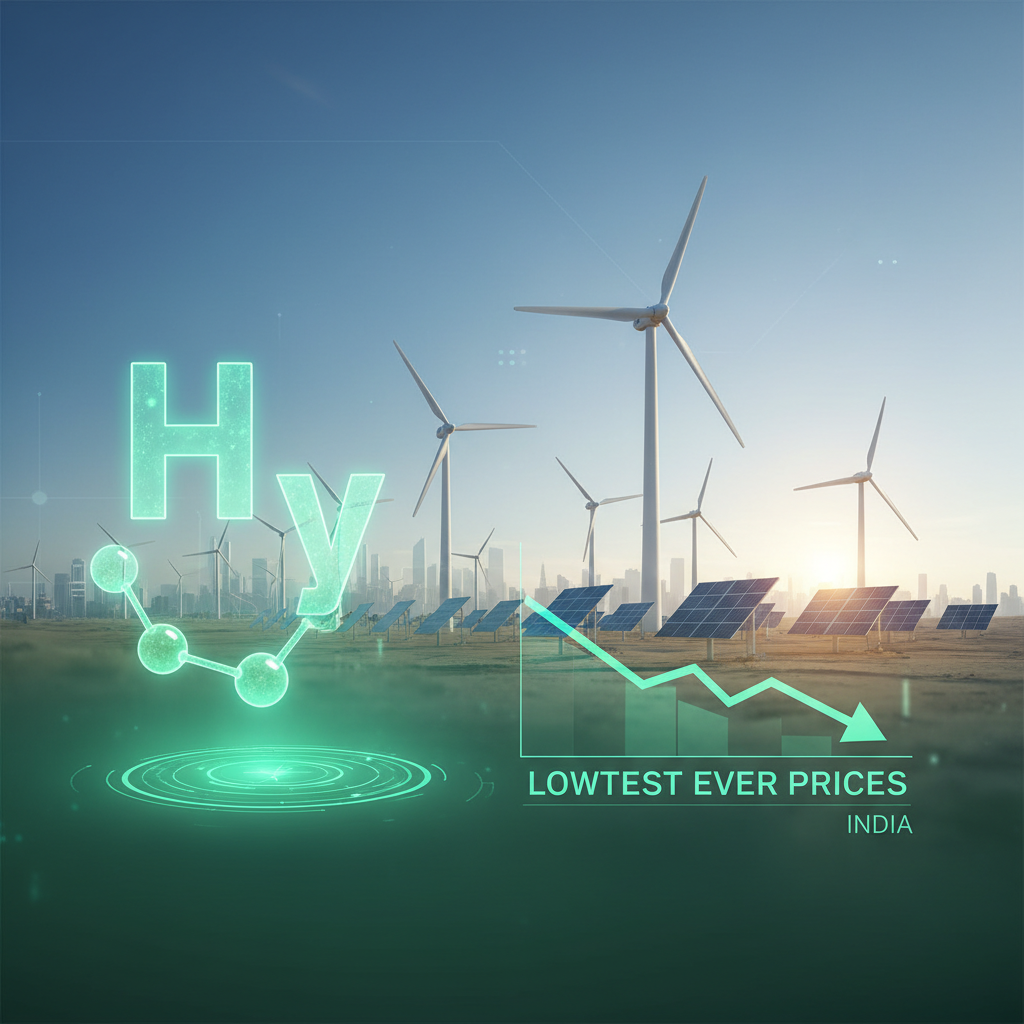
India Records Historic Low Price for Green Hydrogen in Tender
India is making significant strides in the green hydrogen sector, achieving a remarkable milestone with the lowest-ever price recorded in a recent tender. This achievement underscores the nation’s commitment to renewable energy and its potential to become a leader in the global green hydrogen market. The context for this breakthrough lies in the broader energy transition, where green hydrogen is increasingly viewed as a crucial element in decarbonizing hard-to-abate sectors like steel and cement.
A Confluence of Factors Driving Down Costs
Several factors have converged to enable India to achieve these competitive rates. The primary drivers are the country’s low renewable energy costs and the strategic implementation of government incentives. These incentives encompass financial aid for green hydrogen production and support for equipment manufacturing. This holistic approach creates a favorable ecosystem for investors and developers, fostering innovation and driving down the overall cost of green hydrogen production.
The success in India provides a compelling case study for other nations looking to accelerate their green hydrogen initiatives. The availability of affordable renewable energy sources is a critical factor. Furthermore, well-designed government policies can play a pivotal role in attracting investment and promoting the rapid deployment of green hydrogen technologies. The tender’s outcome indicates that India is successfully navigating this complex landscape.
Overcoming Challenges and Embracing Opportunities
While the potential of green hydrogen is widely recognized, its adoption faces challenges. Demand and usage in sectors like steel and cement remain relatively low, causing some investors to hesitate. However, India’s proactive measures, including financial support and a focus on cost reduction, are helping to overcome these hurdles. The recent tender results demonstrate that India is actively working to bridge the gap between potential and reality.
The government’s focus on equipment manufacturing is also significant. By supporting domestic production, India can reduce its reliance on imports, create jobs, and further lower the overall cost of green hydrogen projects. This integrated approach, combining cost-effective renewable energy, financial incentives, and manufacturing support, positions India well for future growth in the green hydrogen sector.
Policy and Sectoral Implications
This achievement has important implications for both energy policy and various industrial sectors. For policymakers, it validates the effectiveness of targeted incentives and the importance of fostering a supportive regulatory environment. The success of the tender should encourage further investment and innovation in the green hydrogen value chain. For sectors like steel and cement, the lower costs of green hydrogen make it a more viable option for decarbonization, paving the way for sustainable industrial practices.
The recent tender in India highlights the country’s dedication to its energy transition goals. By embracing cost-effective renewable energy, implementing thoughtful policy, and promoting local manufacturing, India is not just reducing the cost of green hydrogen; it’s also positioning itself as a global leader in the clean energy revolution. This is a significant step towards a more sustainable future.
About the Author