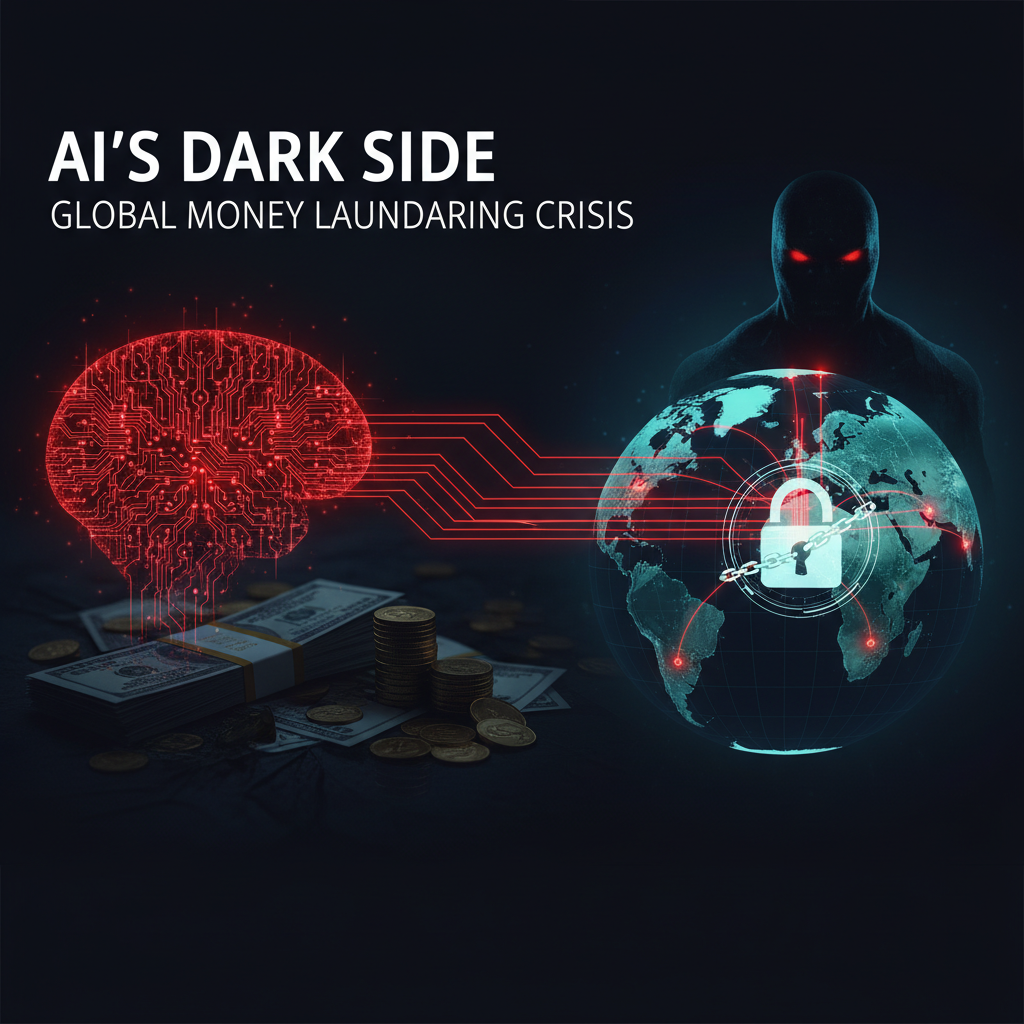
AI’s Dark Side: How It’s Fueling a Global Money Laundering Crisis
The rapid advancement of artificial intelligence (AI) is reshaping the global financial landscape. While offering unprecedented opportunities for innovation and efficiency, AI is also creating new avenues for illicit financial activities. This article delves into the concerning trend of AI-powered money laundering, deepfake fraud, and regulatory forum shopping, highlighting the urgent need for robust global AI governance.
The Rise of AI in Illicit Finance
As AI reshapes finance, it is also enabling sophisticated forms of financial crime. Criminals are increasingly leveraging AI to automate and scale their operations, making it more challenging for regulatory bodies to detect and prevent illegal activities. Through the use of AI in financial systems, money laundering has become more efficient and harder to trace. The use of AI algorithms to analyze vast datasets allows criminals to identify vulnerabilities in financial systems and exploit them for their gain. Furthermore, AI-powered deepfakes are being used to commit fraud, further complicating the fight against illicit finance.
The Governance Gap
The current regulatory frameworks are struggling to keep pace with the rapid evolution of AI. This creates a significant global AI governance gap. The lack of standardized regulations and international cooperation allows criminals to exploit jurisdictional differences, engaging in regulatory forum shopping to find the most lenient environments for their operations. This poses a major threat to the integrity of the global financial system.
Key Threats and Challenges
- AI-powered Money Laundering: AI algorithms can automate the process of layering and integrating illicit funds, making it difficult for authorities to trace the origins of the money.
- Deepfake Fraud: Sophisticated deepfake technology can be used to impersonate individuals, commit fraud, and manipulate financial transactions.
- Regulatory Forum Shopping: Criminals exploit the lack of global harmonization in AI regulations to move their operations to jurisdictions with less stringent oversight.
The Way Forward: Strengthening Global AI Governance
Addressing the challenges posed by AI-driven illicit finance requires a multi-faceted approach. Stronger global AI governance is essential to ensure that the benefits of AI are realized while mitigating the risks. This includes international cooperation, standardized regulations, and the development of advanced detection and prevention tools.
Regulatory bodies must work together to create and enforce consistent standards for AI in finance. This includes developing clear guidelines for the use of AI in financial institutions, as well as establishing mechanisms for sharing information and coordinating enforcement efforts. Investing in advanced technologies, such as AI-powered fraud detection systems, is also crucial to stay ahead of criminals.
Conclusion
The rise of AI presents both opportunities and challenges for the global economy. While AI can drive innovation and efficiency in finance, it also creates new avenues for illicit activities. Addressing the global AI governance gap is crucial to protect the integrity of the financial system and prevent the misuse of this powerful technology. It is imperative that AI developers and regulatory bodies work together to establish robust frameworks and ensure that AI is used responsibly and ethically.
Source: Business Standard
About the Author