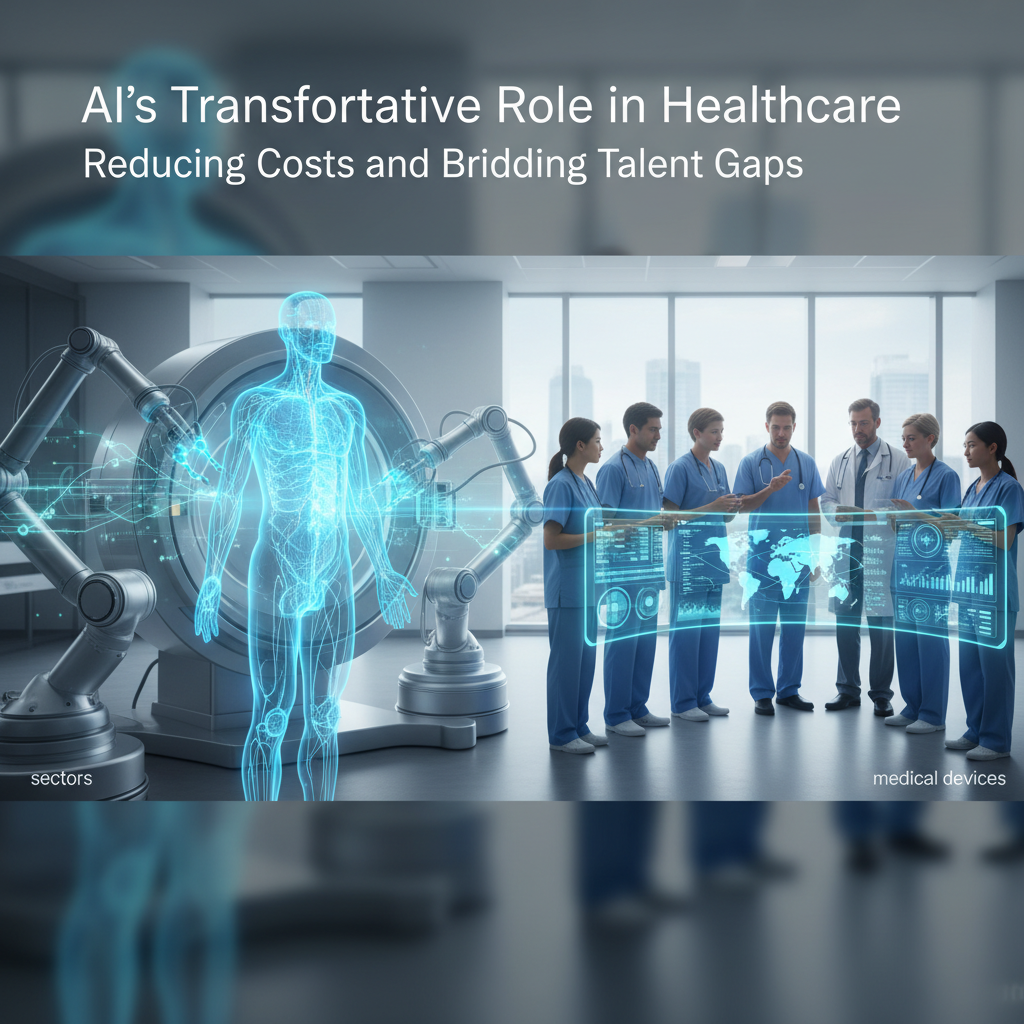
AI’s Transformative Role in Healthcare: Reducing Costs and Bridging Talent Gaps
The convergence of artificial intelligence (AI) and healthcare is poised to reshape the industry significantly by 2026, according to insights shared by industry leaders at the ET Now GBS 2026. This technological shift promises to address some of the most pressing challenges in healthcare, offering innovative solutions and creating new opportunities, particularly for a country like India. The core of this transformation lies in AI’s capacity to reduce healthcare costs, bridge the talent gap, and enhance the overall efficiency of medical practices.
AI’s Impact on Healthcare Costs and Talent
One of the most promising aspects of AI in healthcare is its potential to significantly reduce costs. AI-driven solutions can automate administrative tasks, optimize resource allocation, and improve diagnostic accuracy, ultimately leading to more efficient and cost-effective healthcare delivery. Furthermore, AI can help bridge the talent gap in the healthcare sector. By automating routine tasks and providing decision support, AI allows healthcare professionals to focus on more complex and critical aspects of patient care. This is particularly crucial in regions facing shortages of skilled medical personnel.
Bridging the Talent Gap
Industry leaders recognize that to fully realize the benefits of AI in healthcare, it is essential to equip India’s youth with the necessary skills. This involves a collaborative approach between academia and industry to develop AI-centric training programs and curricula. Such initiatives will ensure that the future workforce is well-prepared to leverage AI technologies in various healthcare settings. The emphasis on education and training is critical for fostering innovation and ensuring that the benefits of AI are accessible to all.
Enhancing Medical Expertise and Efficiency
AI is set to revolutionize how medical expertise is delivered, especially through remote medical expertise. AI-powered platforms can facilitate virtual consultations, remote monitoring of patients, and access to specialized medical knowledge, regardless of geographical limitations. This is particularly relevant in India, where access to specialized healthcare services can be a challenge in certain areas. In addition to remote capabilities, AI is also expected to improve diagnostic efficiency. AI algorithms can analyze medical images and data with remarkable speed and accuracy, aiding in early disease detection and improving treatment outcomes. This promises to improve patient outcomes and streamline healthcare processes.
The Role of Collaboration
The success of this technological revolution hinges on robust collaboration. Academia and industry must work together to develop AI solutions and train the next generation of healthcare professionals. This collaborative approach will not only foster innovation but also ensure that the solutions developed are practical, ethical, and aligned with the needs of patients and healthcare providers.
Capitalizing on India’s Demographic Dividend
The advancements in AI present a significant opportunity for India to leverage its demographic dividend. With a large and youthful population, India is well-positioned to become a hub for AI-driven healthcare innovation. The adoption of AI technologies can create new job opportunities, attract investments, and improve the overall quality of healthcare services across the country. By embracing AI, India can not only enhance its healthcare sector but also drive economic growth and improve the well-being of its citizens.
Conclusion
The integration of AI in healthcare is not just a technological advancement; it is a paradigm shift that promises to transform how healthcare is delivered. By reducing healthcare costs, bridging the talent gap, and improving diagnostic efficiency, AI has the potential to create a more accessible, efficient, and patient-centric healthcare system. India, with its strong emphasis on collaboration and innovation, is well-placed to lead this transformation, capitalizing on its demographic dividend to create a healthier future for all.
Source: ET Now GBS 2026
About the Author