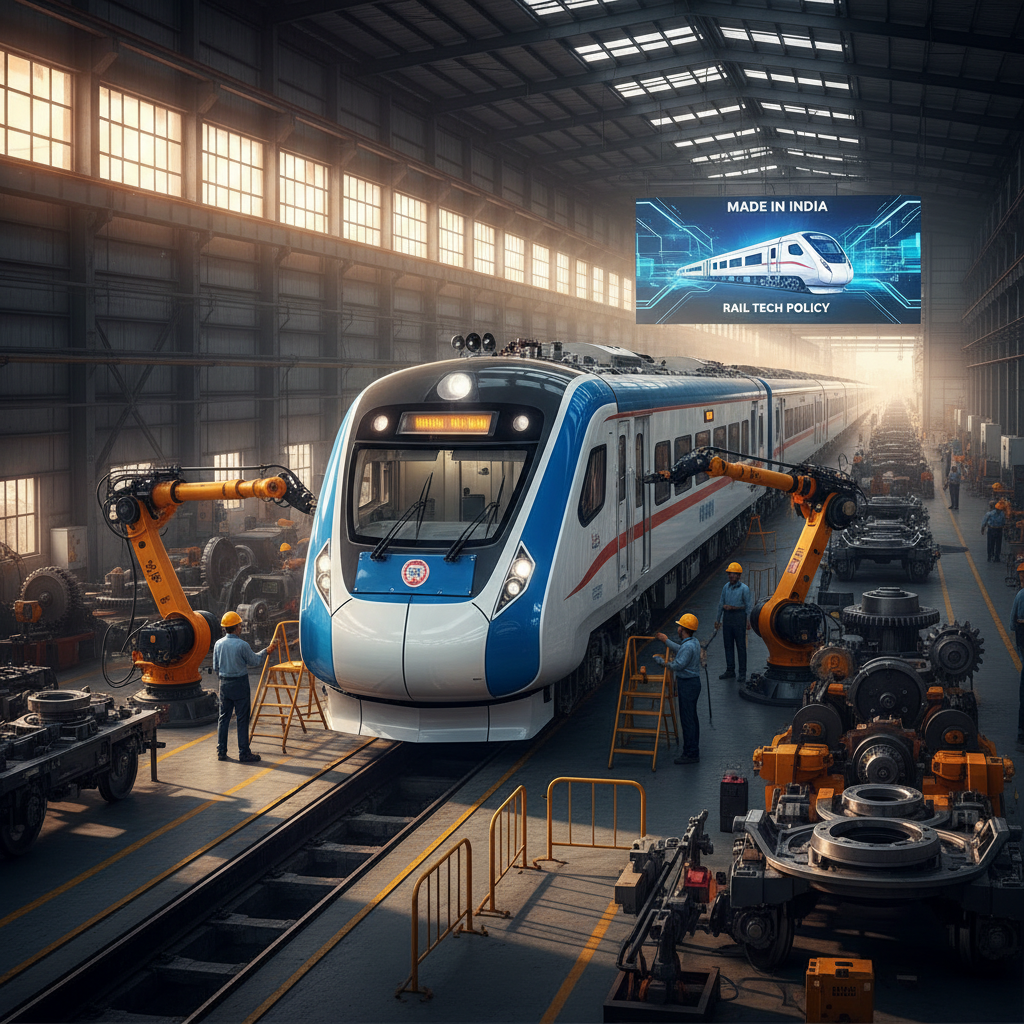
India’s New Railway Tech Policy: Boosting Local Manufacturing
In a significant move poised to reshape the transportation sector, India is on the verge of introducing a groundbreaking railway technology policy. This initiative is designed to revitalize the domestic manufacturing of state-of-the-art railway equipment. The core objective? To catalyze innovation and collaboration within the industry.
The Genesis of a Transformative Policy
The upcoming policy represents a strategic effort to fortify India’s position in the global railway market. When it comes into effect, this policy will focus on several key areas, including technology transfer, research and development, and the creation of a robust ecosystem for local manufacturers. The goal is to reduce reliance on imports and foster self-sufficiency in the production of critical railway components and systems. Why? The primary reason is to invigorate the local manufacturing landscape and to ignite innovation and collaboration. This strategic approach is expected to generate new employment opportunities and stimulate economic growth within the sector.
Key Components and Objectives
The policy’s success hinges on fostering strong partnerships between domestic companies and research institutions. This collaborative approach will enable the sharing of expertise and resources, accelerating the development of innovative railway technologies. What will be the focus? Railway equipment, local manufacturing, innovation, and collaboration. Key objectives include:
- Promoting indigenous design and development of railway technologies.
- Encouraging the adoption of advanced manufacturing processes.
- Creating a conducive environment for startups and SMEs in the railway sector.
- Facilitating technology transfer from global leaders.
The Role of Collaboration
How will this be achieved? By fostering partnerships. The policy will actively encourage collaboration between various stakeholders. This includes public-private partnerships, joint ventures, and technology collaborations. The government will play a crucial role in providing incentives, streamlining regulations, and creating a level playing field for domestic manufacturers. This collaborative ecosystem will be critical for driving innovation and ensuring that India remains at the forefront of railway technology advancements.
Impact on the Transportation Sector
The introduction of this policy is expected to have a far-reaching impact on the transportation sector. By boosting the local manufacturing of railway equipment, India aims to improve the efficiency, safety, and reliability of its railway network. This, in turn, will enhance connectivity and contribute to economic development. The policy is also aligned with the ‘Make in India’ initiative, further emphasizing the government’s commitment to self-reliance and indigenous manufacturing. This will boost the growth of domestic companies, creating more opportunities. The policy aims to be a catalyst for transforming the railway sector.
Conclusion
India’s new railway technology policy is a bold step towards modernizing the railway infrastructure and bolstering the domestic manufacturing capabilities. By prioritizing local manufacturing, innovation, and collaboration, the policy has the potential to transform the transportation sector and contribute significantly to the nation’s economic growth. This initiative reflects India’s commitment to technological advancement and self-reliance in a critical sector.
Source: Industry-Economic Times
About the Author