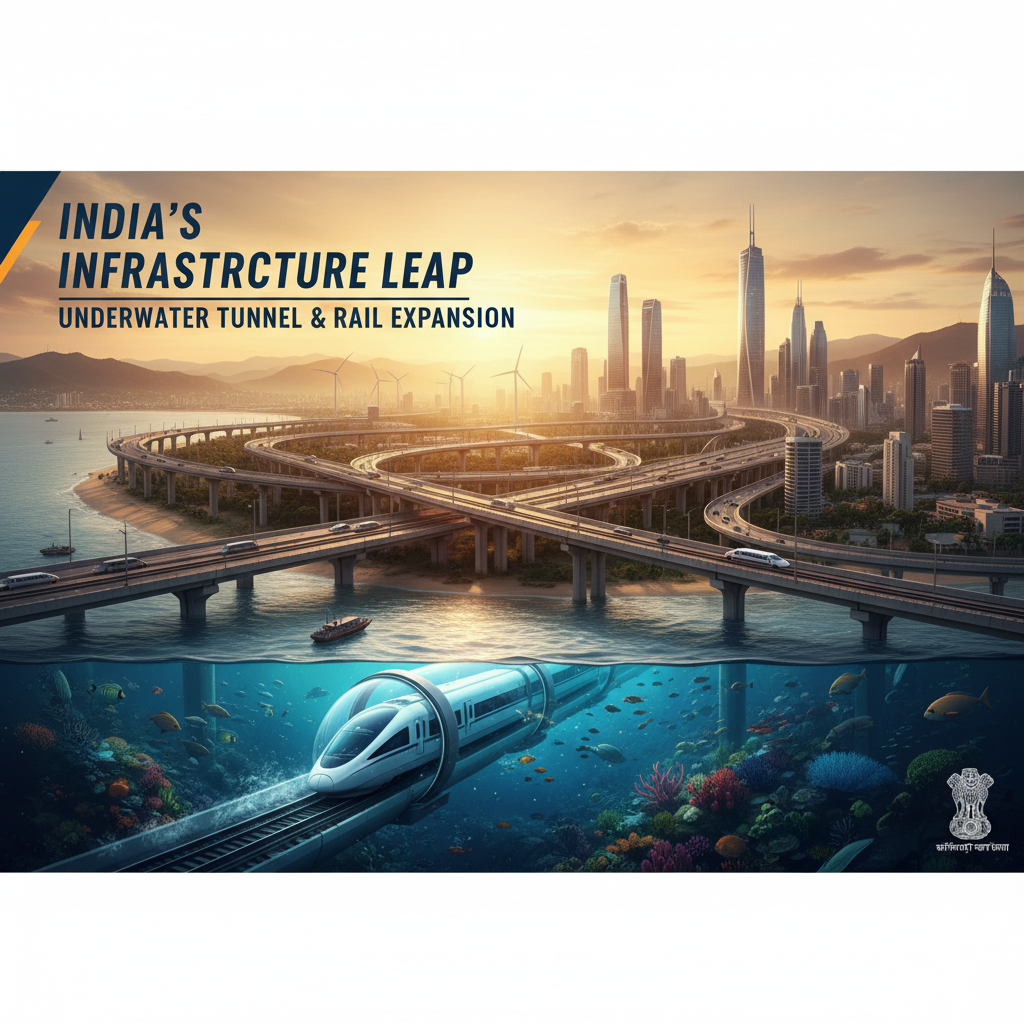
India’s Infrastructure Leap: Cabinet Approves Underwater Tunnel & Rail Expansion
In a move poised to reshape India’s infrastructure landscape, the Union Cabinet has given the green light to a series of ambitious railway and infrastructure projects. This significant decision underscores the government’s commitment to bolstering connectivity and driving economic development across the nation. The approvals, announced during the final Cabinet meeting at South Block, encompass a diverse range of initiatives, from groundbreaking engineering feats to strategic expansions of the existing rail network.
Assam’s Underwater Railway: A First for India
Leading the charge is the approval of India’s first underwater twin tube railway project in Assam. With a substantial allocation of over Rs 18,600 crore, this project represents a monumental step forward in transportation infrastructure. The underwater tunnel will connect Gohpur and Numaligarh, drastically shortening the distance and travel time between these two points. The current journey of 240 km, which takes approximately six hours, will be reduced to a mere 34 km, with a travel time of just twenty minutes. This innovative project not only showcases India’s engineering prowess but also promises to significantly improve regional connectivity and facilitate economic activities in the Northeast.
Expanding the Rail Network: A Multi-State Initiative
Beyond the Assam project, the Cabinet has sanctioned three major railway projects worth over Rs 18,000 crore. These projects are strategically designed to add nearly 400 km to the rail network, spanning across Delhi, Haryana, Maharashtra, and Karnataka. The core objectives of these expansions are multifaceted: to enhance rail capacity, reduce logistics costs, and improve overall connectivity within and between these key regions. The government anticipates that these projects will be completed by 2030-31, creating substantial employment opportunities and fostering economic growth.
A Broader Vision: Infrastructure and Beyond
The approvals during the final Cabinet meeting at South Block also encompassed projects worth over ₹1.60 lakh crore. These initiatives encompass a wide spectrum, including railways, roads, metro expansion, and startup funding. This comprehensive approach reflects a holistic vision for infrastructure development, recognizing its crucial role in driving economic progress. The meeting itself marked the end of a 95-year era at the historic South Block, with future meetings to be held at the new Seva Teerth complex. This transition symbolizes the evolution of governance and the government’s ongoing commitment to modernizing its operations.
Impact and Implications
The Union Cabinet’s decisions have far-reaching implications. The focus on railway and infrastructure projects is expected to create numerous job opportunities and stimulate economic activity across various sectors. By investing in improved connectivity, the government aims to facilitate trade, reduce transportation costs, and improve the overall ease of doing business. The projects approved highlight a commitment to long-term economic growth and a strategic vision for India’s infrastructure development.
The recent approvals from the Union Cabinet signify a bold step towards a more connected and economically vibrant India. The projects, particularly the groundbreaking underwater railway tunnel in Assam, demonstrate the nation’s capacity for innovation and its commitment to building world-class infrastructure. As these projects move forward, they are poised to transform transportation, boost economic activity, and improve the lives of millions of citizens.
Source: Industry-Economic Times
About the Author