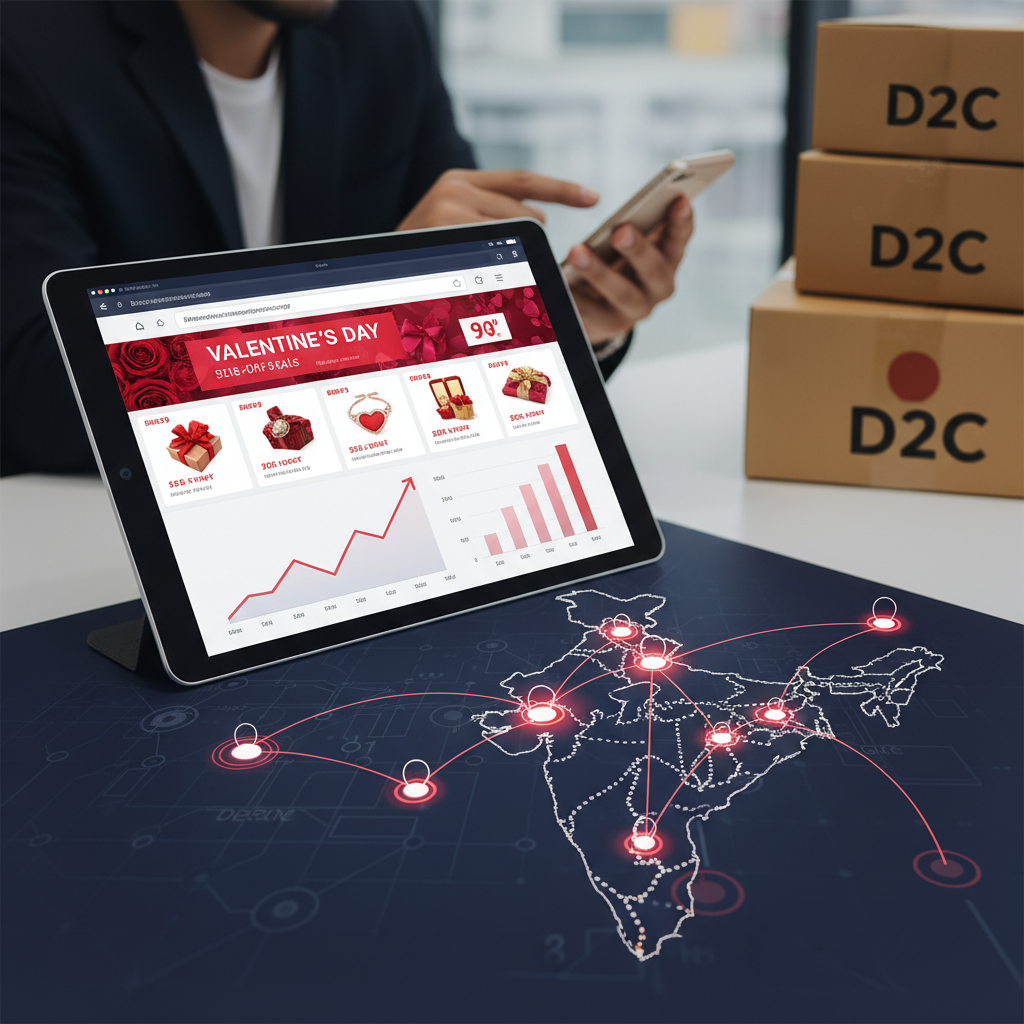
India’s Valentine’s Day Sales Soar, Driven by Tier-3 Cities and D2C Growth
In a remarkable display of evolving consumer behavior, Valentine’s Day in India has witnessed a surge in sales, particularly in the burgeoning markets of Tier-3 cities. This trend, as reported by the Economic Times, signifies a dynamic shift towards lifestyle and aspiration, with the digital landscape playing a pivotal role. The burgeoning Direct-to-Consumer (D2C) e-commerce sector is at the forefront of this growth, reshaping how Indians celebrate love and affection.
The Rise of Practical Gifting
One of the most striking aspects of this year’s Valentine’s Day shopping spree is the preference for practical gifts over traditional ones. Consumers are increasingly opting for items that align with their daily lives and personal interests. This shift is particularly evident in the high demand for minimalist jewelry, fragrances, and wellness kits. These gifts reflect a broader trend of consumers seeking value and utility in their purchases, moving away from purely symbolic gestures.
Female Shoppers Lead the Way
The driving force behind this Valentine’s Day boom is, in large part, female shoppers. They are not only purchasing gifts for their loved ones but also treating themselves. This self-gifting trend underscores a growing emphasis on personal well-being and self-expression. The rise of female consumers in this sector highlights the changing dynamics of Indian society, where women are increasingly empowered and have greater purchasing power. The focus on self-gifting aligns with the broader trend of prioritizing personal wellness and lifestyle choices.
Tier-3 Cities: The New Growth Engine
A significant portion of this growth is coming from Tier-3 cities, which are rapidly becoming the new engines of India’s e-commerce revolution. These smaller towns and cities are experiencing a surge in online commerce, with consumers embracing digital platforms for their shopping needs. The accessibility and convenience of online shopping, coupled with a wider array of product choices, have made D2C brands particularly appealing to consumers in these regions. The growth in Tier-3 cities demonstrates the expanding reach of e-commerce and its impact on consumer behavior across different demographics.
D2C and E-commerce: A Winning Combination
The success of Valentine’s Day sales in India highlights the power of the D2C model, particularly when combined with the reach of e-commerce. By focusing on practical gifts like minimalist jewelry, fragrances, and wellness kits, businesses are meeting the evolving needs and preferences of consumers. The ability to directly engage with customers, coupled with the convenience of online shopping, has allowed D2C brands to thrive in this market. The trend underscores the importance of understanding consumer behavior and adapting to changing market dynamics.
Conclusion
The surge in Valentine’s Day sales in India, driven by Tier-3 shoppers and the popularity of practical gifts, paints a picture of a dynamic and evolving consumer market. The rise of female shoppers and the success of D2C brands highlight the transformative power of e-commerce and its ability to cater to the changing needs and aspirations of consumers. As online commerce continues to penetrate deeper into the Indian market, this trend is expected to continue, shaping the future of retail and consumer behavior.
Source: Industry-Economic Times
About the Author