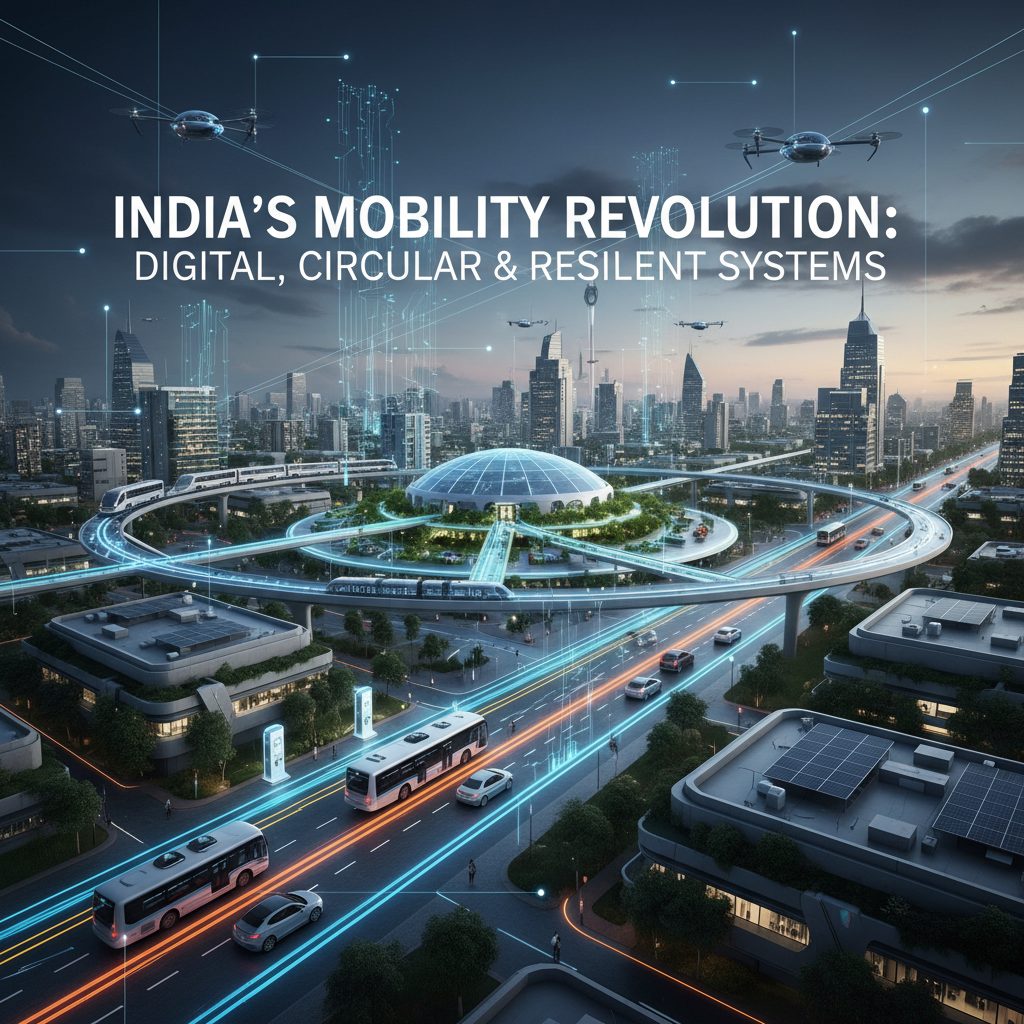
India’s Mobility Revolution: Digital, Circular & Resilient Systems
The future of mobility manufacturing in India is undergoing a profound transformation. At the IIOTM 2026 event, a pivotal gathering of industry leaders, the blueprint for a greener, more integrated, and resilient mobility paradigm is being meticulously crafted. This shift is not merely incremental; it represents a fundamental re-evaluation of how vehicles are designed, produced, and sustained throughout their lifecycles. This article explores the key drivers behind this revolution, focusing on the pivotal roles of digital, circular, and resilient systems.
The Players and Their Vision
The IIOTM 2026 summit brings together key players from the automotive sector, alongside representatives from tyres, batteries, digital services, and automation. These leaders are united by a common goal: to map India’s transition towards a more sustainable and robust mobility ecosystem. Their discussions revolve around how to integrate advanced technologies and innovative strategies to achieve this vision. This collaborative effort underlines the interconnectedness of various sectors and the shared responsibility in shaping the future of mobility.
Digital Systems: The Engine of Transformation
The integration of digital systems is at the heart of this mobility revolution. The use of data-in-motion and AI-led manufacturing is reshaping factories and supply chains, enabling unprecedented levels of efficiency, precision, and responsiveness. Smart factories, powered by real-time data analytics, can optimize production processes, predict maintenance needs, and reduce downtime. This digital transformation not only boosts productivity but also enhances the ability to adapt quickly to changing market demands and technological advancements.
Circular Systems: Designing for Sustainability
Circular systems represent a paradigm shift in how products are designed and managed. The concept of circular design, which focuses on minimizing waste and maximizing resource utilization, is gaining prominence. This approach extends beyond the manufacturing stage, encompassing the entire product lifecycle, from design and production to usage and end-of-life management. By embracing circularity, the industry aims to reduce its environmental footprint, conserve resources, and create more sustainable business models. This includes strategies like designing for disassembly, using recycled materials, and implementing closed-loop systems where materials are reused and repurposed.
Resilient Systems: Building for the Future
Resilient systems are crucial in an era of increasing uncertainty and disruption. Building resilience involves creating flexible and adaptable supply chains, diversifying sourcing, and implementing robust risk management strategies. This means preparing for unexpected events, such as natural disasters, economic downturns, and geopolitical instability. Resilient systems are designed to withstand shocks and maintain operations, ensuring the continuous flow of goods and services. This approach is not only vital for business continuity but also contributes to the overall stability and sustainability of the mobility sector.
The IIOTM 2026: A Roadmap for Change
The IIOTM 2026 event serves as a critical platform to outline how these digital, circular, and resilient systems are reshaping factories, supply chains, and product lifecycles. The event is a strategic initiative to show how data-in-motion, AI-led manufacturing, and circular design are key to achieving a green, integrated, and resilient mobility paradigm. The focus is on practical strategies, technological innovations, and collaborative partnerships that will drive the industry forward. The discussions at IIOTM 2026 are crucial in shaping the future of mobility manufacturing in India, setting the stage for a new era of sustainability, efficiency, and resilience.
Conclusion
The transformation of mobility manufacturing in India is well underway, driven by the convergence of digital, circular, and resilient systems. The insights and strategies discussed at IIOTM 2026 will undoubtedly play a key role in shaping the future of the automotive sector and beyond. As the industry embraces these innovative approaches, it not only enhances its competitiveness but also contributes to a more sustainable and resilient future for all.
About the Author