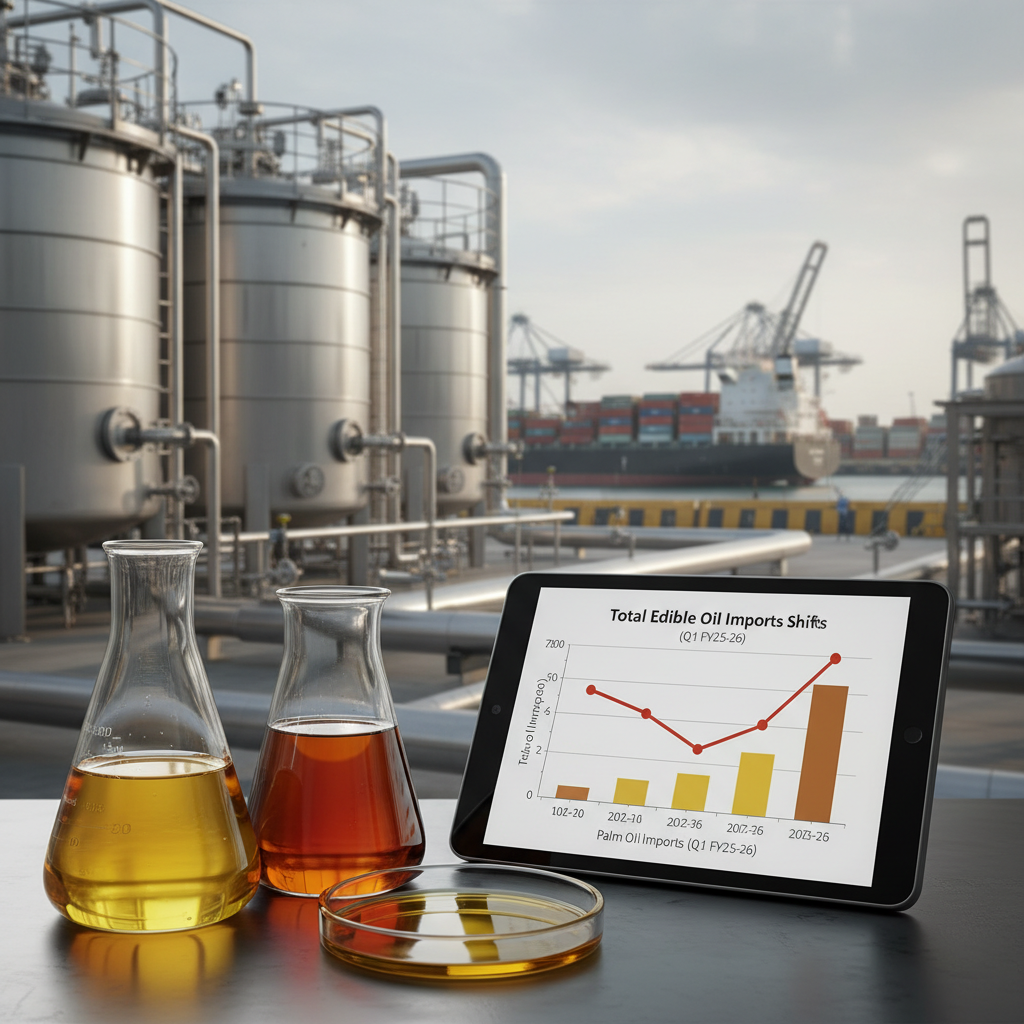
India’s Edible Oil Imports Dip in Q1 2025-26: Palm Oil Gains Amidst Shifts
In the dynamic landscape of global trade, India, the world’s largest vegetable oil importer, witnessed a nuanced shift in its edible oil import patterns during the first quarter of the 2025-26 oil year (November-October). According to data released on Friday, overall vegetable oil imports experienced a 2% decrease, totaling 3.96 million tonnes. This figure represents a slight dip from the 4.05 million tonnes imported during the same period a year earlier, as reported by the Solvent Extractors Association of India (SEA).
Palm Oil Dominates Growth
While the overall import volume decreased, the data reveals a significant rise in palm oil imports. During the November 2025-January 2026 quarter, palm oil imports surged by 18%, reaching 1.91 million tonnes. This increase is a notable jump from the 1.62 million tonnes recorded in the corresponding period of the previous year. The industry body, SEA, also noted that port stocks of palm oil were substantial, standing at 4,86,000 tonnes as of February 1, which is 33,000 tonnes higher than the previous month.
Soybean and Sunflower Oil See Declines
The decrease in overall edible oil imports was primarily driven by reduced purchases of crude soybean and sunflower oils. Crude soybean oil imports fell by 9% to 1.20 million tonnes from 1.27 million tonnes. Consequently, port stocks of crude soybean oil also declined, dropping to 1,90,000 tonnes from 3,00,000 tonnes the previous month. Similarly, crude sunflower oil imports experienced a 15% decrease, totaling 7,59,000 tonnes. This shift in import dynamics underscores the fluctuating market forces and consumer preferences that influence India’s edible oil trade.
Factors Influencing the Market
Several factors could contribute to these shifts. The rise in palm oil imports might be due to competitive pricing and its versatility in various food applications. Conversely, the decline in soybean and sunflower oil imports could be attributed to a combination of factors, including domestic production levels, global supply dynamics, and changes in consumer demand. The SEA’s data provides crucial insights into these market trends, helping stakeholders understand the evolving landscape of India’s edible oil sector.
Conclusion
The recent data from the SEA highlights the complex interplay of factors that shape India’s edible oil import market. While palm oil continues to strengthen its position, the decrease in soybean and sunflower oil imports signifies a period of adjustment. As India navigates the global vegetable oil market, monitoring these trends will be crucial for businesses and policymakers alike. The figures reveal the ongoing shifts in the Indian economy and its trade relationships.
Source: Business Standard
About the Author