India’s Copper Ambition: Forging Self-Reliance in a Metal-Driven Future
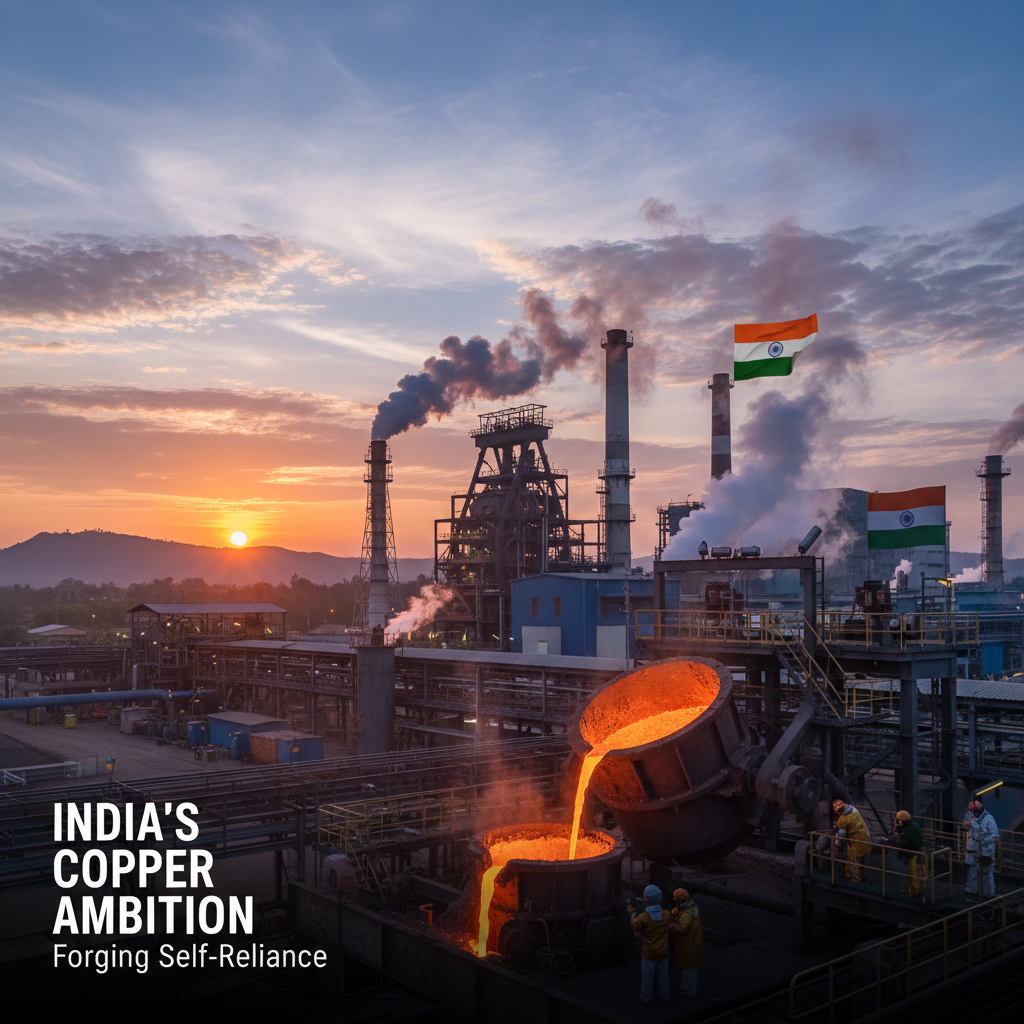
India stands at a pivotal juncture, its sights set on realizing the ambitious goal of Viksit Bharat by 2047. Central to this vision is achieving self-reliance, particularly in critical sectors like copper. As the world’s fastest-growing major economy, India recognizes that its future hinges on more than just participating in the global supply chain. It needs to evolve, transforming itself into a sophisticated processor and manufacturer. This shift is not merely about economic growth; it’s about securing India’s place as a global leader.
The Strategic Importance of Copper
Copper is far more than just a metal; it is the lifeblood of modern economies. From electrical wiring and infrastructure to advanced manufacturing and renewable energy systems, copper is indispensable. India’s burgeoning economy, with its ambitious infrastructure projects and expanding manufacturing base, has an ever-increasing demand for this essential resource. Ensuring a steady and reliable supply of copper is therefore paramount for sustained economic growth.
The Path to Self-Reliance
The journey towards copper self-reliance involves several key strategies. Firstly, it requires substantial investment in domestic copper mining and refining capabilities. India must increase its capacity to extract copper ore and process it into usable forms. This includes modernizing existing facilities and establishing new ones, equipped with the latest technologies to enhance efficiency and reduce environmental impact. Secondly, fostering innovation within the metal fabrication sector is crucial. This involves developing advanced manufacturing techniques and processes that enable India to produce high-value copper products, rather than simply exporting raw materials.
Furthermore, strategic partnerships and collaborations can play a vital role. India can leverage its relationships with other nations to secure access to copper resources and technologies. This could involve joint ventures, technology transfer agreements, and other forms of collaboration that support the development of a robust and resilient copper industry.
The Transformation: From Subcontractor to Sophisticated Processor
The transition from being a global subcontractor’s workshop to a sophisticated processor represents a significant leap. It demands a shift in mindset, from simply fulfilling orders to designing, developing, and manufacturing advanced copper-based products. This requires investments in research and development, skills training, and the creation of a supportive ecosystem for innovation. India must cultivate a workforce equipped with the skills and expertise needed to compete in the global market.
The Vision for Viksit Bharat by 2047
The pursuit of copper self-reliance is deeply intertwined with the vision of Viksit Bharat by 2047. This vision encompasses economic prosperity, technological advancement, and sustainable development. By mastering the copper value chain, India can enhance its manufacturing competitiveness, create high-skilled jobs, and reduce its dependence on imports. This, in turn, will contribute to a more resilient and self-sufficient economy, capable of weathering global economic fluctuations.
Conclusion
India’s endeavor to achieve self-reliance in copper is a strategic imperative. It’s a complex undertaking that requires a multifaceted approach, encompassing investments in mining, manufacturing, technology, and strategic partnerships. As India moves toward its 2047 vision, the ability to control its copper supply chain and transform its manufacturing capabilities will be critical to its success. This transformation will not only drive economic growth but also solidify India’s position as a global leader in the metal industry.
About the Author