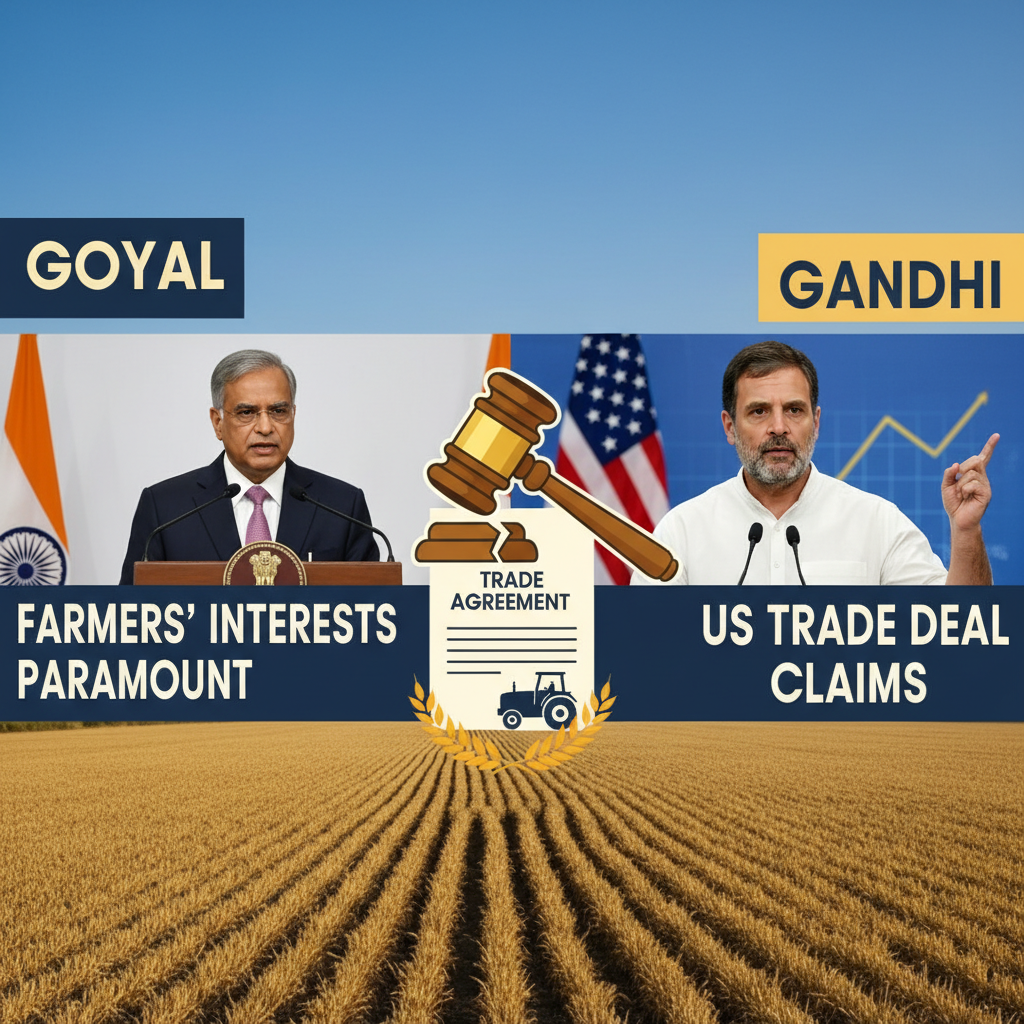
Goyal Rebukes Gandhi Over US Trade Deal Claims: Farmers’ Interests Paramount
In a recent development concerning the India-US interim trade deal, Commerce Minister Piyush Goyal has openly criticized Rahul Gandhi, accusing him of disseminating misinformation. The core of the dispute revolves around the impact of the trade agreement on Indian farmers and the broader implications for the nation’s export landscape. This political clash underscores the complexities inherent in trade policy and the importance of safeguarding domestic interests.
The Heart of the Matter: Farmers and Trade
At the center of this disagreement lies the question of how the India-US trade deal will affect India’s agricultural sector. Piyush Goyal has been steadfast in his assertion that the interests of Indian farmers are fully protected under the terms of the agreement. He has emphasized that the deal is structured to ensure that Indian agricultural products can access the US market without undermining the livelihoods of domestic farmers. The minister’s remarks are a direct response to Rahul Gandhi’s claims, which appear to have raised concerns among some segments of the population.
The government’s stance is that the agreement is designed to boost exports, particularly in areas where India possesses a competitive advantage. The intention is to create new opportunities for Indian businesses, thereby fostering economic growth. The details of the trade deal, however, remain a subject of scrutiny and debate, with various stakeholders offering differing perspectives. The government’s narrative stresses the importance of balancing the benefits of increased trade with the need to protect the interests of local producers.
Political Dimensions and Accusations
The exchange between Piyush Goyal and Rahul Gandhi is more than just a policy disagreement; it’s a political dispute. The accusations of spreading “lies” indicate the depth of the divide between the two figures and the parties they represent. This public disagreement highlights the role of trade policy as a political tool, capable of igniting public debate and influencing public opinion.
Rahul Gandhi’s criticisms, although not fully detailed in the source, likely center on the potential risks of the trade deal for Indian farmers. Such concerns are not uncommon, as trade agreements can sometimes expose domestic producers to increased competition. The government’s response, as articulated by Piyush Goyal, is a defense of the deal, emphasizing its benefits and countering the narrative that farmers’ interests are at risk.
The Broader Implications for Trade Policy
This episode serves as a reminder of the broader context in which trade policy operates. Trade agreements are not merely economic instruments; they are also political ones. They can have far-reaching consequences for various sectors of the economy and the lives of individual citizens. The India-US interim trade deal is a case in point, highlighting the need for careful consideration of all stakeholders’ interests.
The dispute between Piyush Goyal and Rahul Gandhi also underscores the importance of transparency and open communication in trade negotiations. When details are unclear or when different parties interpret the terms of an agreement differently, it can lead to confusion and distrust. Clear, consistent messaging from the government, along with a willingness to address the concerns of various stakeholders, is crucial for ensuring public support for trade deals.
Conclusion
The clash between Piyush Goyal and Rahul Gandhi over the India-US trade deal reflects the intricate relationship between trade policy, political maneuvering, and the protection of domestic interests. While the government, through Piyush Goyal, assures that farmers’ interests are protected and exports will rise, the opposition’s concerns highlight the need for continued scrutiny and debate. This ongoing dialogue is essential to shape trade policy that benefits all parties involved.
Source: Business Standard
About the Author