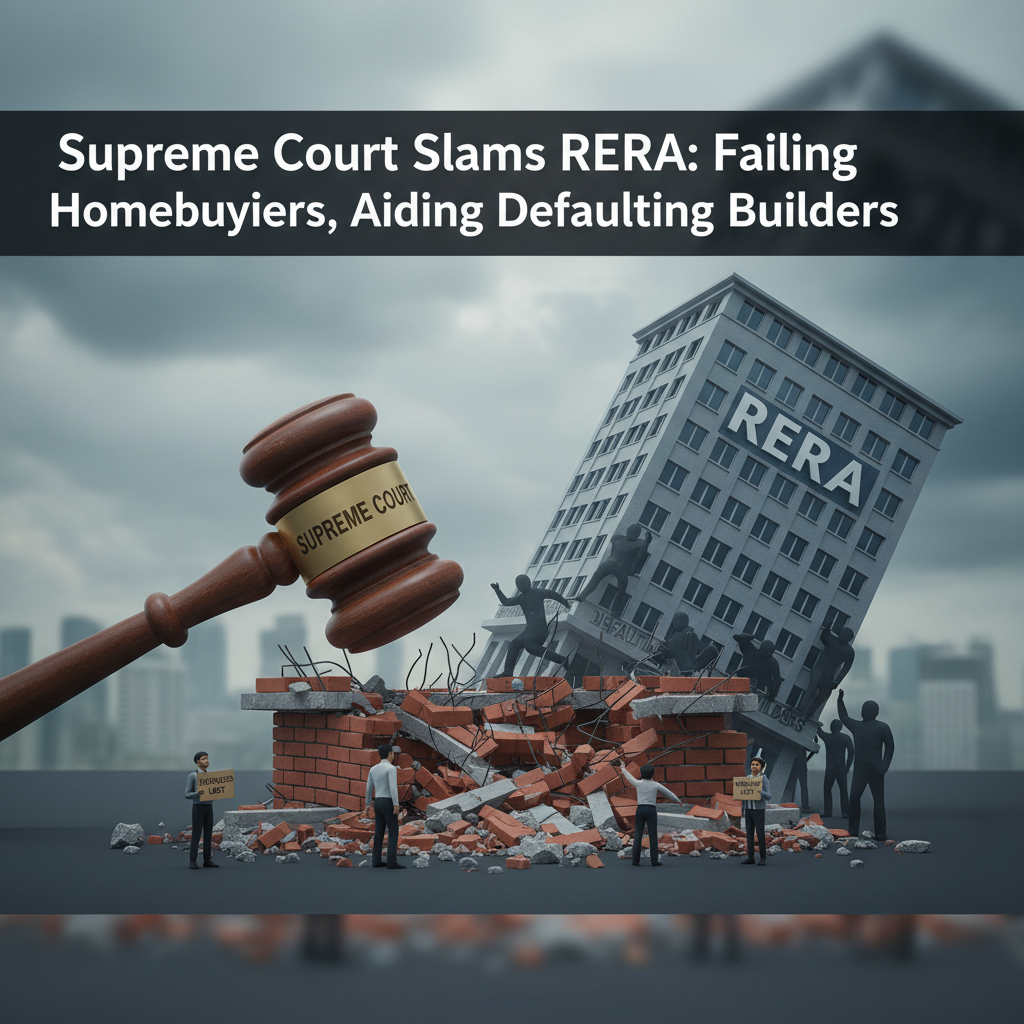
Supreme Court Slams RERA: Failing Homebuyers, Aiding Defaulting Builders
In a strong indictment of the Real Estate Regulatory Authority (RERA), the Supreme Court has voiced serious concerns over its effectiveness, or lack thereof, in protecting the interests of homebuyers. The court’s remarks, delivered by a bench comprising Chief Justice Surya Kant and Justice Joymalya Bagchi, paint a grim picture of RERA’s performance, suggesting it has, in effect, become an enabler of defaulting builders rather than a safeguard for aggrieved consumers.
A Crisis of Confidence in RERA
The core of the Supreme Court’s criticism revolves around the profound disappointment felt by those RERA was created to protect. The bench did not mince words, stating that the people for whom RERA was designed are now “completely depressed, disgusted and disappointed.” This sentiment underscores a significant erosion of trust in an institution meant to bring transparency and accountability to the real estate sector. The court’s willingness to consider abolishing RERA speaks volumes about the perceived failure of the regulatory body to fulfill its fundamental purpose.
The Alleged Role in Facilitating Defaulting Builders
The court’s assertion that RERA appears to be facilitating defaulting builders is particularly troubling. While the exact mechanisms through which this is happening weren’t specified in the report, the implication is clear: RERA is either unable or unwilling to hold builders accountable for their contractual obligations. This can manifest in several ways, from delayed project approvals and inadequate dispute resolution to a reluctance to impose penalties on errant builders. Such failures directly contribute to the hardship faced by homebuyers, who are often left with incomplete projects and financial losses.
The Broader Implications for the Real Estate Sector
The Supreme Court’s critique has far-reaching implications for the real estate sector. It highlights the urgent need for a more robust and effective regulatory framework that genuinely protects the interests of homebuyers. The negative sentiment expressed by the court could further erode investor confidence, potentially impacting new project launches and overall market stability. The incident also serves as a stark reminder of the importance of accountability and transparency in an industry that plays a crucial role in India’s economic growth.
Potential Pathways to Reform
To restore confidence, a comprehensive review of RERA’s functioning is essential. This review should assess the effectiveness of its dispute resolution mechanisms, the speed and fairness of its adjudication processes, and the enforcement of its orders. It may also be necessary to revisit the powers granted to RERA and consider whether additional measures are needed to ensure that builders adhere to their commitments. Furthermore, greater transparency in RERA’s operations, including the publication of data on complaints, resolutions, and penalties, could help rebuild trust and improve accountability.
Conclusion
The Supreme Court’s strong words regarding RERA’s performance are a wake-up call for policymakers and regulators. The current situation, where homebuyers are reportedly “depressed, disgusted and disappointed,” is unsustainable. Addressing the court’s concerns requires a concerted effort to strengthen the regulatory framework, enhance accountability, and ensure that RERA truly serves the interests of those it was created to protect. The future of the real estate sector may depend on it.
Source: Economic Times
About the Author