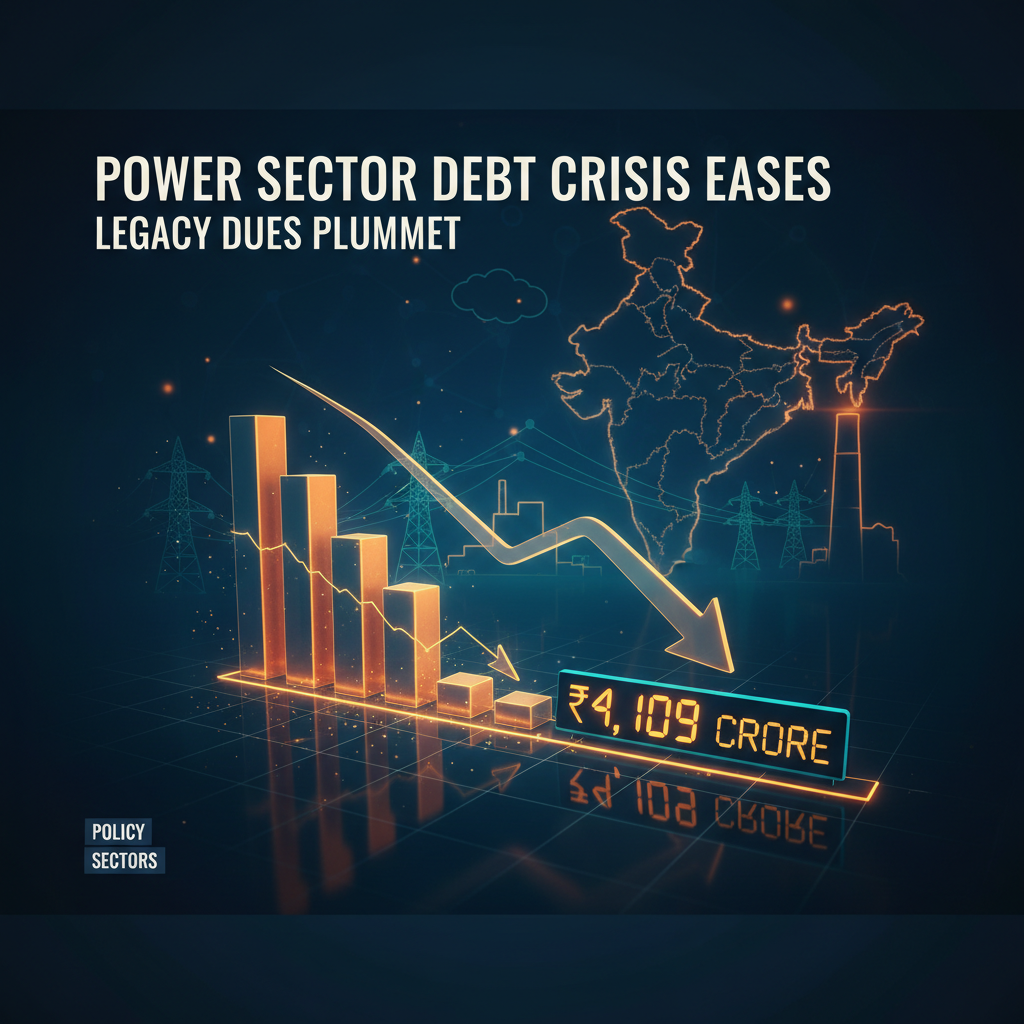
Power Sector Debt Crisis Eases: Legacy Dues Plummet to ₹4,109 Crore
The Indian power sector has witnessed a substantial financial recovery, marked by a dramatic reduction in outstanding dues. According to recent reports, legacy dues have plummeted to ₹4,109 crore by February 2026. This represents a remarkable achievement, especially when considering that these dues stood at a staggering ₹1.40 lakh crore in June 2022. This positive trend underscores the effectiveness of recent policy interventions and regulatory changes aimed at improving the financial health of the energy sector.
Government Policy Fuels Financial Recovery
The driving force behind this significant reduction in outstanding amounts is the Government’s Electricity (Late Payment Surcharge and Related Matters) Rules, 2022. These rules have been instrumental in streamlining the payment processes and enforcing stricter financial discipline within the power sector. By implementing these regulations, the Government has created a framework that encourages timely payments and reduces the accumulation of legacy dues. The impact of these financial regulations is evident in the swift and substantial decrease in outstanding amounts, reflecting a healthier financial environment for power distribution companies and other stakeholders.
Key Factors Contributing to Debt Reduction
The reduction in legacy dues is a multi-faceted success story, stemming from a combination of regulatory enforcement and improved financial practices. The Electricity Rules have provided a clear roadmap for addressing outstanding debts, setting deadlines, and imposing penalties for non-compliance. This has incentivized timely payments and compelled power distribution companies to clear their dues. Furthermore, the overall improvement in the financial performance of the energy sector has also played a crucial role. With enhanced financial stability, entities within the sector are better equipped to manage their debts and meet their financial obligations.
Impact on the Energy Sector
The reduction in legacy dues has far-reaching positive implications for the power sector. It enhances the financial stability of distribution companies, enabling them to invest in infrastructure upgrades, improve operational efficiency, and provide better services to consumers. This improved financial health also makes the sector more attractive to investors, potentially leading to increased investments and further growth. In essence, the debt reduction is not just a financial victory; it is a catalyst for the overall development and modernization of the Indian energy landscape.
Looking Ahead
The success in reducing legacy dues signals a positive trajectory for the power sector. However, continued vigilance and proactive measures are essential to sustain this momentum. The Government and regulatory bodies must continue to enforce existing regulations and explore new initiatives to further strengthen the financial framework of the sector. The focus should remain on promoting financial discipline, encouraging timely payments, and ensuring the long-term sustainability of the Indian energy sector. As the sector continues to evolve, adapting to changing market dynamics and technological advancements will be crucial for maintaining financial health and driving further growth. (Source: Industry-Economic Times)
About the Author