Jindal Stainless to Boost Specialty Steel Production Under PLI Scheme
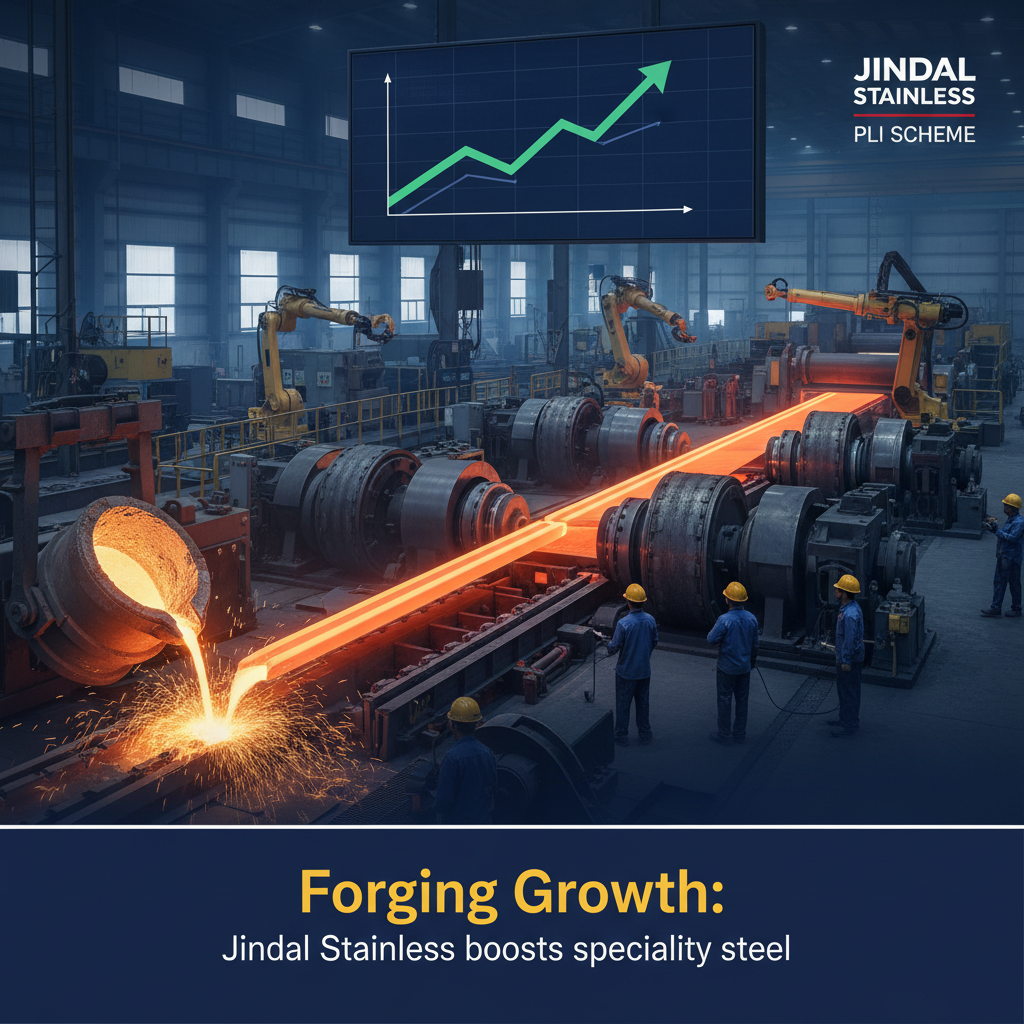
In a significant move for the Indian steel industry, Jindal Stainless has entered into an agreement with the Ministry of Steel. This collaboration is part of the Production Linked Incentive (PLI) scheme 1.2, a government initiative designed to bolster domestic manufacturing capabilities. The primary goal of this partnership is to expand Jindal Stainless’s capacity for producing value-added products, including specialized alloys and forged products. This strategic expansion is particularly timely, given the rising demand for high-quality stainless steel across various key sectors within India.
Strategic Alignment and Capacity Expansion
The PLI scheme, as a government policy, is a crucial element in India’s drive towards self-sufficiency in the production of special steel grades. By incentivizing domestic manufacturers, the scheme aims to reduce reliance on imports and promote indigenous manufacturing. Jindal Stainless’s decision to participate in PLI 1.2 underscores its commitment to the ‘Make in India’ initiative and its strategic vision for growth within the steel industry. The agreement specifically focuses on increasing production capacity for a range of value-added products. These include not only specialized alloys but also forged products, which are essential components in various industrial applications.
Meeting Rising Demand
The expansion is a direct response to the growing demand for high-quality stainless steel. This demand is fueled by the expansion of various sectors, including manufacturing, infrastructure development, and automotive industries. The investment in capacity expansion by Jindal Stainless is strategic. It positions the company to capitalize on the increasing market opportunities. By focusing on value-added products, Jindal Stainless aims to cater to the specific needs of these sectors. This will include providing materials with enhanced properties and performance characteristics.
The Significance of Forged Products and Specialized Alloys
The emphasis on forged products and specialized alloys highlights a move towards higher-value manufacturing. Forged products often require specialized techniques like forging to achieve the desired strength and durability. These products are critical in sectors where components must withstand high stress and extreme conditions. Similarly, specialized alloys are engineered to meet specific requirements, such as corrosion resistance or high-temperature performance. The ability to produce these materials domestically will reduce the reliance on imports.
The PLI Scheme’s Impact on the Steel Sector
The PLI scheme is designed to transform the steel industry in India. By offering financial incentives, the government encourages investments in new technologies and capacity expansions. This, in turn, boosts domestic production and fosters innovation within the sector. The participation of major players like Jindal Stainless in the scheme will have a ripple effect. It will encourage other companies to invest in upgrading their facilities and expanding their product portfolios. This will lead to a stronger, more self-reliant steel industry, capable of meeting the growing needs of the Indian economy.
Conclusion
The agreement between Jindal Stainless and the Ministry of Steel under the PLI 1.2 scheme marks a significant step forward in India’s journey towards self-reliance in the specialty steel sector. By expanding its capacity for value-added products and forged products, Jindal Stainless is not only positioning itself for growth. It is also contributing to the broader goal of making India a global manufacturing hub. The initiative is a testament to the positive impact of strategic government policies and the commitment of industry leaders to drive economic development and innovation. The investment will increase the production of specialty steel products, meeting the rising demand and making India self-sufficient in the steel industry. This expansion is happening under PLI 1.2.
Source: Economic Times
About the Author