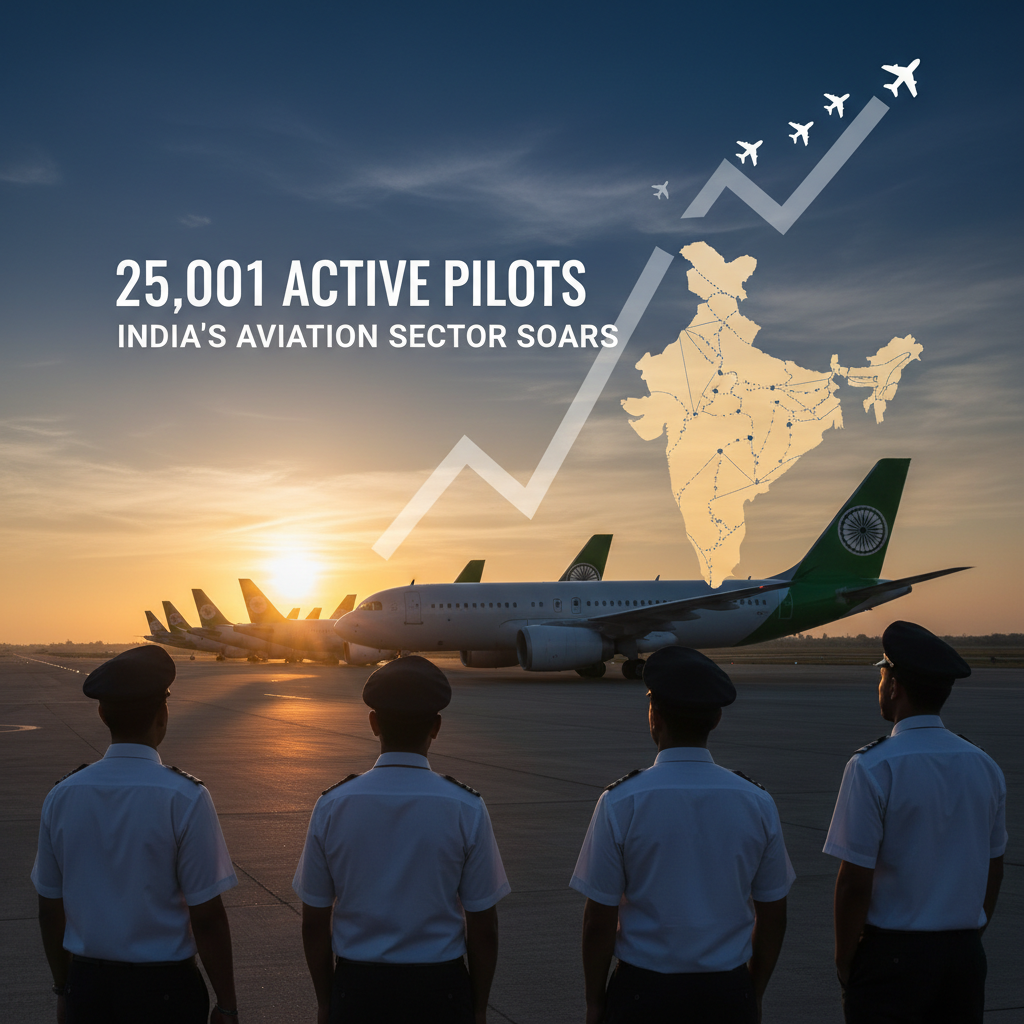
India’s Aviation Sector Soars: 25,001 Active Pilots Reported
The Indian aviation sector continues its impressive ascent. A recent report presented to Parliament by the Government of India highlights a key indicator of this growth: the country currently boasts 25,001 active pilots. This figure underscores the robust state of India’s aerospace components sector and its expanding operational capacity. The data, sourced from the Directorate General of Civil Aviation (DGCA), paints a clear picture of the industry’s health and potential.
Key Highlights from the Government’s Report
The Government of India’s report offers a detailed snapshot of India’s pilot workforce. Of the total active pilots, 10,261 hold an Airline Transport Pilot License (ATPL). The DGCA, responsible for issuing these licenses, plays a crucial role in regulating and overseeing pilot qualifications and standards. It’s important to note that the data specifically encompasses pilots under the age of 65, providing a focused view of the active workforce. The report also details various license categories, offering insight into the diverse skill sets within India’s pilot community.
The Role of the DGCA and License Management
The Directorate General of Civil Aviation (DGCA) serves as the primary authority for aviation safety and regulation in India. Its responsibilities include the issuance of pilot licenses, ensuring adherence to international standards, and overseeing the overall safety of air operations. The DGCA’s meticulous record-keeping provides the foundation for understanding the size and composition of India’s pilot pool. This information is vital for strategic planning and resource allocation within the aviation sector. The process of obtaining and maintaining these licenses involves rigorous training and continuous assessment, ensuring that all pilots meet the required competency levels.
Pilot Employment and Sector Dynamics
While the Government’s report provides valuable insights into the number of active pilots and their licensing, it also highlights an area where data is not tracked. The DGCA does not currently monitor pilot unemployment rates. This lack of data presents a potential gap in the understanding of the overall employment landscape within the aviation sector. Understanding pilot employment trends could be crucial for assessing the industry’s ability to absorb new pilots and for forecasting future workforce needs. As the sector grows, monitoring employment dynamics will become increasingly important.
Implications for the Aerospace Components Sector
The growth in the number of active pilots directly correlates with the expansion of India’s aviation infrastructure, including the demand for aircraft and aerospace components. More pilots mean more flights, which in turn drives the need for aircraft maintenance, spare parts, and other related services. This creates significant opportunities for companies involved in manufacturing, supplying, and servicing aerospace components. The increase in pilot numbers signals a healthy and expanding market for these businesses, fueling further investment and innovation within the sector.
Conclusion
The Government of India’s report on the number of active pilots provides a positive outlook for the Indian aviation sector. The significant number of pilots, coupled with the ongoing efforts of the DGCA to maintain high standards, reflects a dynamic and growing industry. This growth has significant implications for the aerospace components sector, creating opportunities for sustained expansion and development. As the Indian aviation market continues to evolve, the availability of a skilled and licensed pilot workforce will remain a critical factor in its success.
Source: Industry-Economic Times (https://economictimes.indiatimes.com/industry/transportation/airlines-/-aviation/india-has-25001-active-pilots-govt-tells-parliament/articleshow/128263375.cms)
About the Author