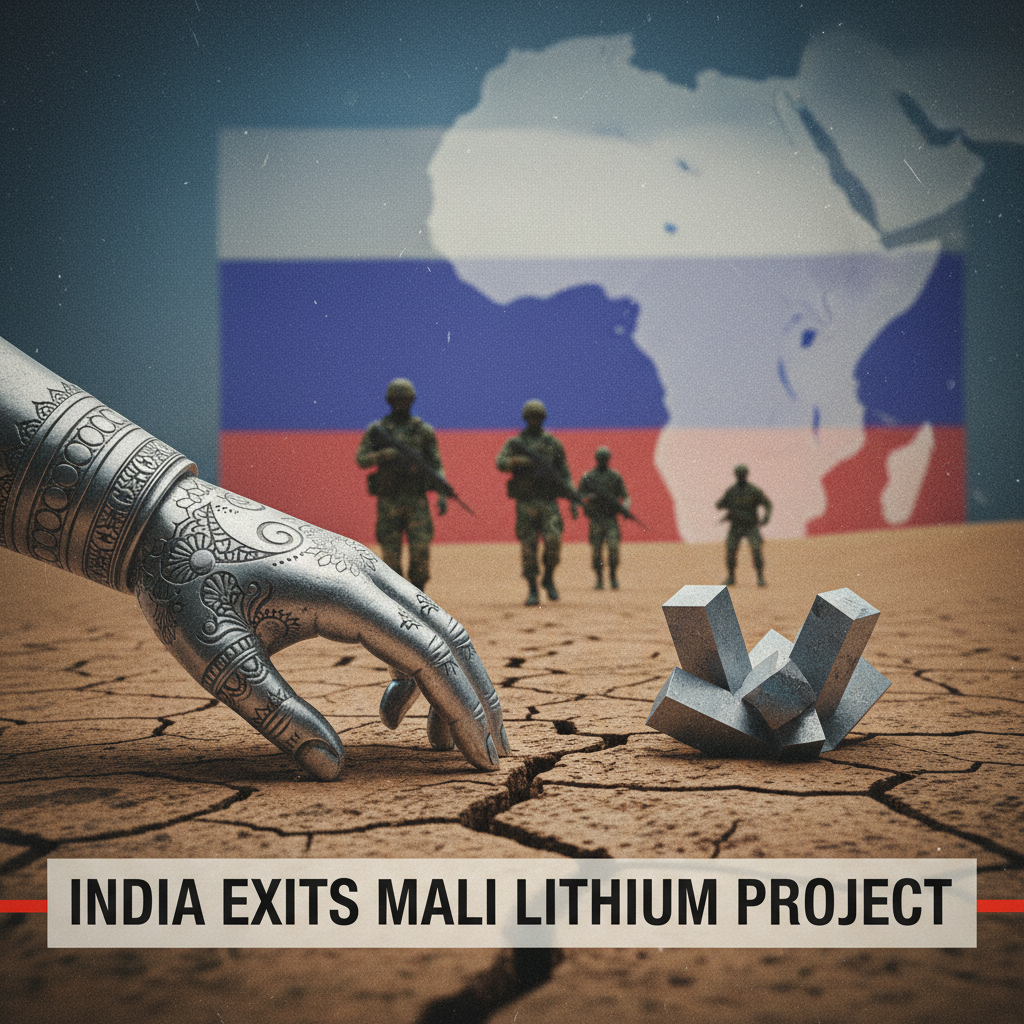
India Exits Mali Lithium Project Amid Security Concerns and Russian Ties
In a move reflecting growing concerns over geopolitical risks, India has decided to pull out of a lithium project in Mali. The decision, reported by the Economic Times, highlights the precarious balance between resource acquisition and investment security in regions experiencing political instability. The project, which was backed by Russia’s state-owned nuclear energy corporation, Rosatom, has been put on hold, signaling a strategic recalibration by India.
The Rationale Behind the Withdrawal
The primary drivers behind India’s withdrawal are the escalating security risks and political instability within the West African nation. The situation has become so concerning that Western nations have advised their citizens to leave Mali. This environment presents significant challenges for safeguarding investments and ensuring operational continuity. India’s decision underscores a cautious approach to international projects, especially when the investment climate is fraught with uncertainty.
The Russian Connection and Geopolitical Implications
The involvement of Rosatom adds another layer of complexity to the situation. Russia’s backing of the lithium project positions the development within a broader geopolitical context. India’s decision to withdraw can be seen as a strategic move to avoid entanglement in a project with potential security vulnerabilities, especially given the current global landscape. This also reflects India’s commitment to protecting its financial interests in a volatile environment.
Impact on Lithium Supply Chains and Investment Strategies
The cancellation of the lithium project in Mali has implications for the global supply chain of critical minerals, particularly lithium, which is essential for electric vehicle batteries and other renewable energy technologies. The decision also prompts a reevaluation of investment strategies for countries seeking to secure resources in politically sensitive regions. India’s move serves as a cautionary tale, emphasizing the importance of rigorous risk assessment and due diligence in international investments.
Security Risks and Investment Protection
The core reason for India’s departure is the precarious security situation in Mali. The instability puts investments at risk. The Indian government is prioritizing the safety of its investments. This proactive stance is crucial in areas where political and security landscapes are in constant flux.
The Role of Rosatom and Geopolitical Considerations
Rosatom’s backing adds a geopolitical dimension to the project. India’s decision to withdraw highlights the need to consider the broader implications of partnering with entities from countries with complex international relations. This underscores the need for careful consideration of all potential risks.
Conclusion
India’s withdrawal from the lithium project in Mali is a clear indication of the growing importance of assessing and mitigating risks in international investments. The decision highlights the necessity of balancing economic interests with geopolitical realities and security concerns. As the global landscape continues to evolve, this case provides valuable lessons for policymakers and investors alike, underscoring the need for diligence and adaptability in the face of uncertainty.
Source: Economic Times
About the Author