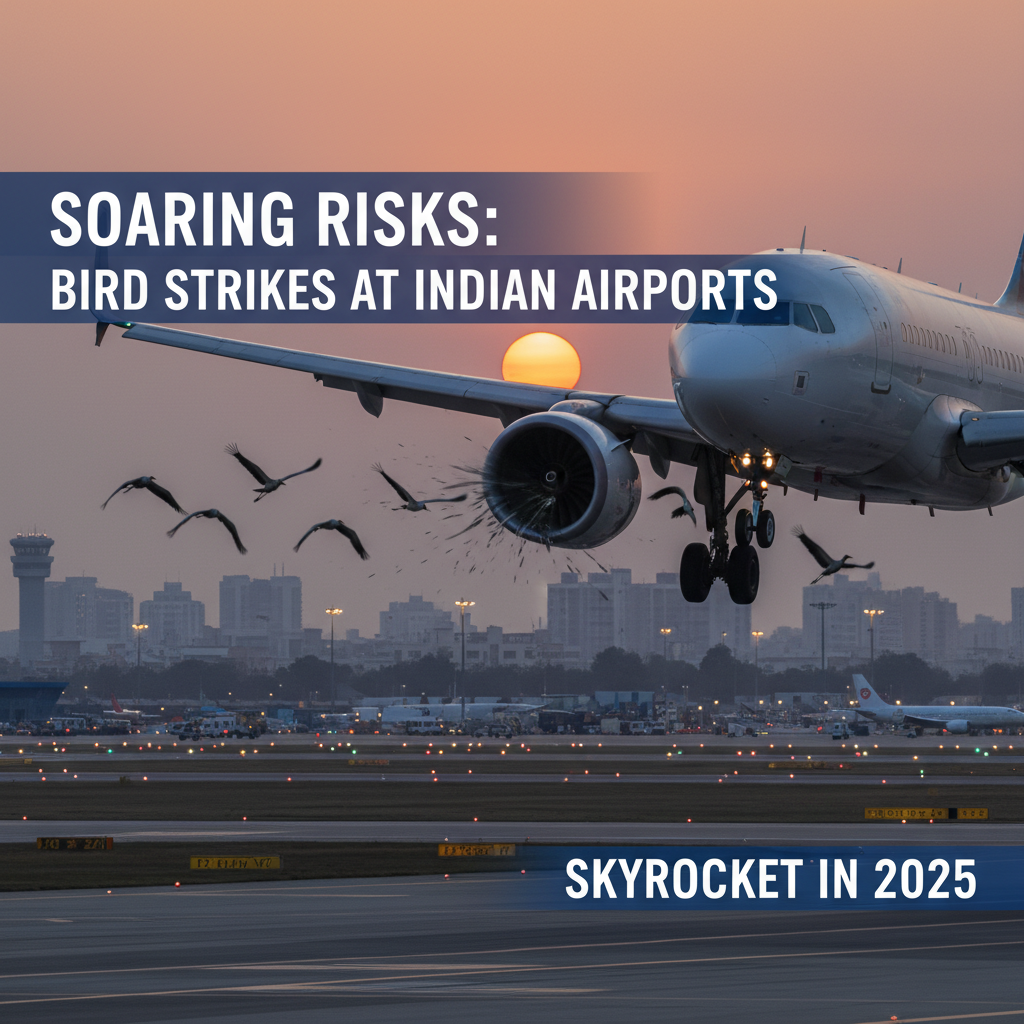
Soaring Risks: Bird Strikes at Indian Airports Skyrocket in 2025
The skies above India’s airports became significantly more hazardous in 2025, according to recent reports. The number of bird-hit incidents reported at these airports surged to an alarming 1,782 last year, a development that has sent ripples of concern throughout the aviation sector. This represents a substantial increase compared to previous years, underscoring the growing threat these incidents pose to air travel safety.
Aviation Safety Under Threat
The rise in bird strikes is more than just a statistical blip; it’s a stark reminder of the potential dangers lurking in the skies. A bird strike can cause significant damage to an aircraft, ranging from minor dents to more serious structural issues that can compromise flight safety. The Indian airports, and indeed the entire aviation industry, are now compelled to confront this escalating challenge head-on.
The Numbers Speak Volumes
The data from last year paints a clear picture: Indian airports experienced an unprecedented number of bird-hit incidents in 2025. This surge is not an isolated event but rather a trend that demands immediate attention. The implications are far-reaching, affecting not just the safety of passengers and crew but also the operational efficiency of airports and airlines.
Combating the Threat: Wildlife Management Initiatives
In response to this growing threat, airport authorities are actively implementing wildlife management initiatives. The primary why behind these initiatives is to combat bird-related threats to planes. These initiatives encompass a range of strategies, from habitat modification to active bird deterrents, all designed to reduce the likelihood of bird strikes. The how involves a multi-pronged approach that includes regular monitoring, habitat management, and the use of technologies like radar systems to track bird movements.
The Bigger Picture: Airport Security and Aviation’s Future
The issue of bird strikes extends beyond immediate safety concerns; it touches upon the broader context of airport security and the future of aviation. As air travel becomes increasingly accessible, the need for robust safety measures becomes ever more critical. The strategies employed to mitigate bird strikes are, therefore, an integral part of ensuring the long-term viability and safety of the aviation industry.
Looking Ahead: Proactive Measures and Continuous Improvement
The situation at Indian airports in 2025 serves as a crucial case study. The increased number of bird-hit incidents highlights the need for continuous improvement and a proactive approach to safety. As the industry evolves, so too must the strategies employed to manage wildlife and protect aircraft. This involves not only implementing current best practices but also investing in research and development to discover more effective ways to mitigate the risks associated with bird strikes.
Source: Industry-Economic Times
About the Author