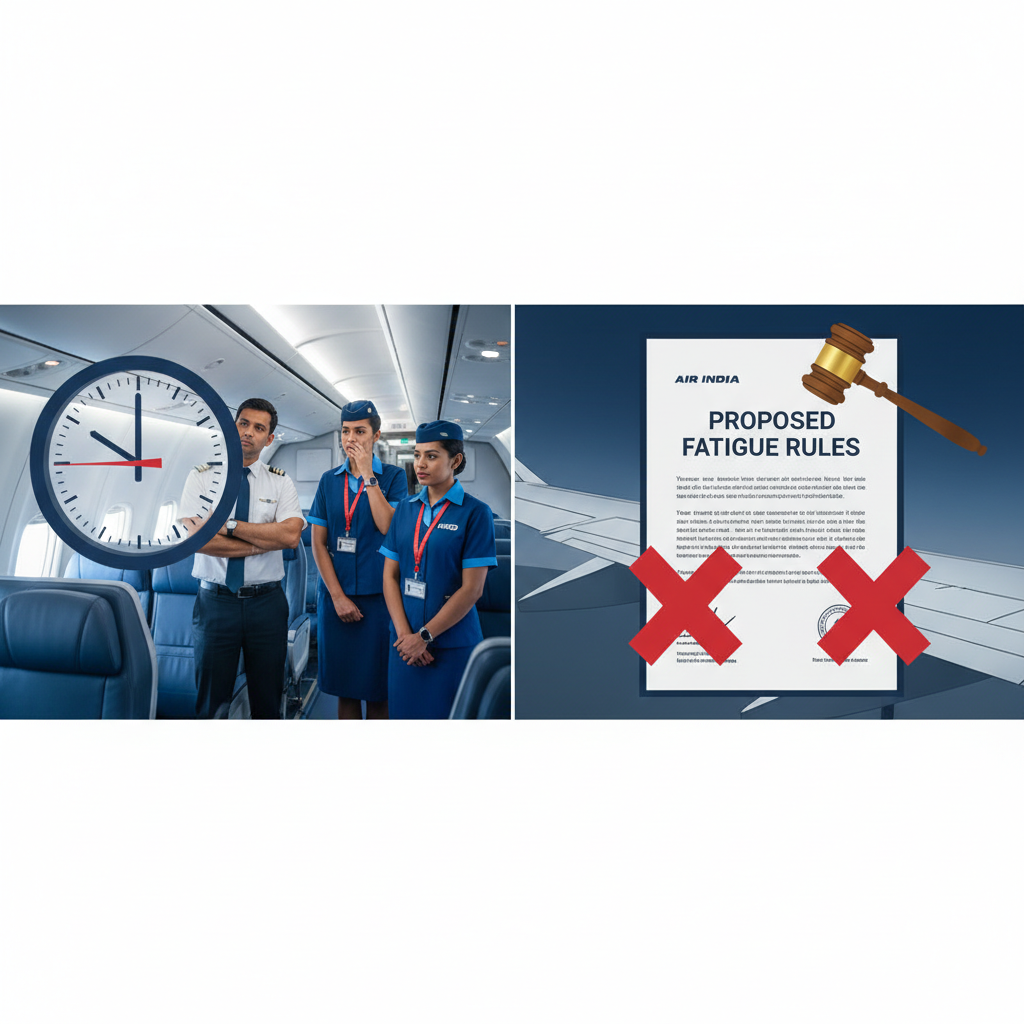
Air India, IndiGo Seek Revisions to Cabin Crew Fatigue Rules
In a move that underscores the ongoing tensions between regulatory mandates and operational realities, India’s leading airlines, Air India and IndiGo, are actively seeking adjustments to the government’s proposed fatigue rules for cabin crew. The crux of their concern lies in the potential for these new regulations to disrupt flight schedules and impede the growth trajectory of the aviation sector. This situation highlights the delicate balance between ensuring crew well-being and maintaining the operational efficiency critical for a competitive airline industry.
The Core of the Dispute
At the heart of the matter are the proposed changes concerning cabin crew rest periods and accommodation. The new rules, as reported by the Economic Times, include provisions for increased rest time and the requirement of single hotel rooms for crew members. While these measures are designed to enhance crew safety and well-being, Air India and IndiGo contend that they go beyond the standards observed in other parts of the world. This divergence, the airlines argue, could place them at a disadvantage in the fiercely competitive global aviation market.
The primary worry expressed by the airlines revolves around the practical implications of these rules. They anticipate significant challenges in maintaining existing flight schedules if the new regulations are strictly enforced. The ripple effect could include flight delays, cancellations, and ultimately, a decrease in operational efficiency. This, in turn, could negatively impact the airlines’ ability to meet the growing demand for air travel, potentially hindering the sector’s growth.
A Balancing Act: Safety, Efficiency, and Competitiveness
The Indian government, in its role as regulator, faces the complex task of balancing crew safety with the operational needs of the airline industry. The proposed fatigue rules are undoubtedly intended to improve working conditions for cabin crew, recognizing the critical role they play in ensuring passenger safety and comfort. However, the airlines’ concerns point to the potential for unintended consequences that could undermine the industry’s competitiveness.
Air India and IndiGo, as major players in the Indian aviation landscape, have a vested interest in maintaining a competitive edge. The airlines’ plea to ease the proposed rules is, therefore, not simply a matter of cost-cutting. It is a strategic move to preserve their operational flexibility and ability to compete effectively in a global market. Furthermore, the airlines’ arguments underscore the need for a regulatory framework that is both robust in its safety provisions and adaptable to the practical realities of the aviation business.
Looking Ahead
The situation involving Air India, IndiGo, and the Indian government highlights the ongoing dialogue between the aviation industry and its regulators. The outcome of this discussion will have significant implications for the future of air travel in India. As the airlines and the government navigate these challenges, it will be crucial to find a solution that prioritizes both crew well-being and the sustainable growth of the aviation sector.
The resolution of this issue will likely involve a careful consideration of global best practices, the specific operational contexts of Indian airlines, and the broader economic implications for the industry. The discussions between Air India, IndiGo, and the government will undoubtedly shape the future of cabin crew regulations and, by extension, the overall landscape of air travel in India. The stakes are high, and the decisions made now will resonate throughout the industry for years to come.
Source: Industry-Economic Times
About the Author