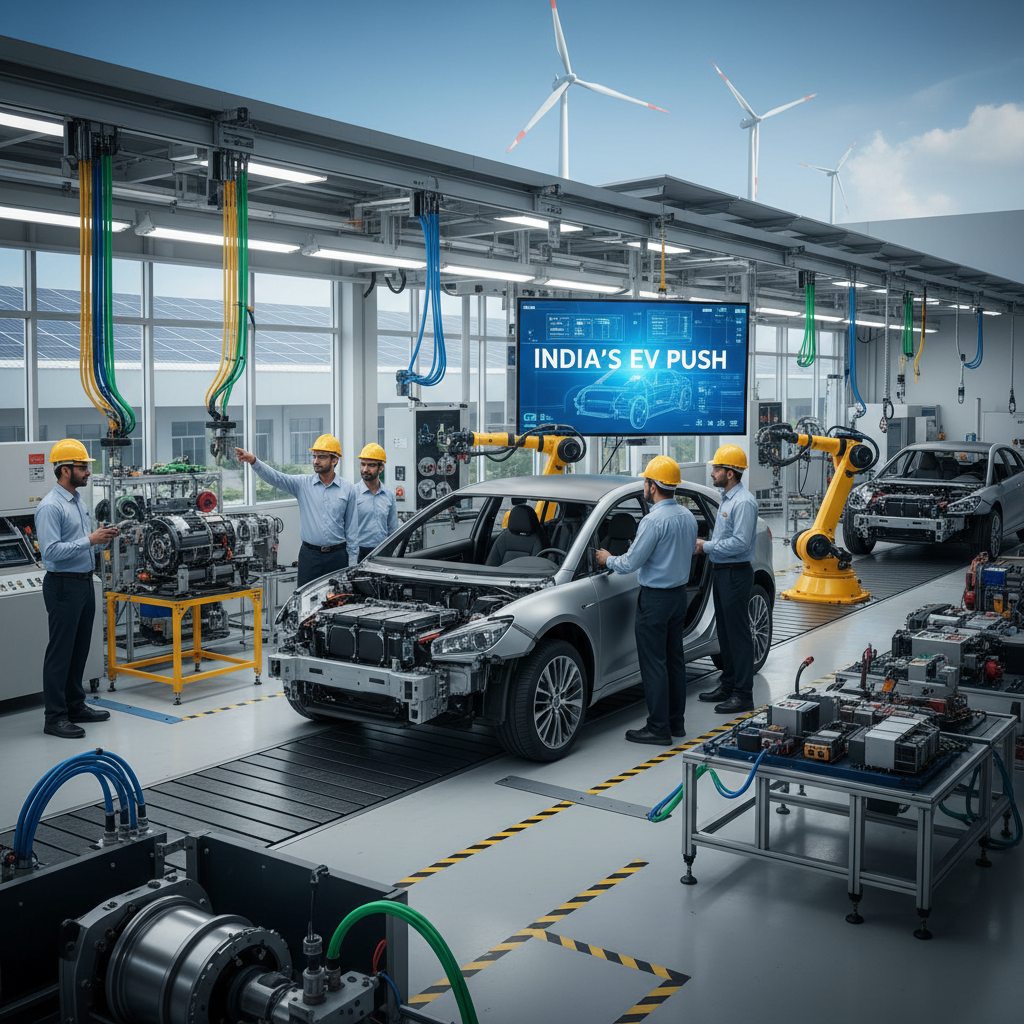
India’s EV Push: Building Resilient Industries and Livelihoods
India is on a mission to reshape its industrial landscape and fortify livelihoods through a concerted push towards electric vehicles (EVs). Heavy Industries Minister H.D. Kumaraswamy has emphasized that the EV transition in India has moved beyond mere intent and is now firmly in the implementation phase. This shift is being driven by a multi-pronged strategy that includes Production Linked Incentive (PLI) incentives, a rapid expansion of charging infrastructure, and a robust push for domestic manufacturing capabilities.
The Strategic Pillars of India’s EV Transition
The transition to EVs is not just about replacing internal combustion engines; it’s a strategic move to build resilient industries and create sustainable employment opportunities. The Indian government’s approach is built on several key pillars:
- PLI Incentives: These incentives are designed to attract investments in the EV sector, encouraging both domestic and international manufacturers to set up production facilities in India. The PLI scheme provides financial assistance to companies that meet specific production and sales targets, thereby reducing the overall cost of manufacturing EVs and their components.
- Charging Expansion: A critical aspect of EV adoption is the availability of a reliable and widespread charging infrastructure. The government is actively supporting the expansion of charging stations across the country, making it easier for EV owners to charge their vehicles conveniently. This includes both public and private charging networks, ensuring that EV users can travel long distances without range anxiety.
- Domestic Manufacturing Push: To reduce dependence on imports and boost self-reliance, India is encouraging domestic manufacturing of EVs and their components. This initiative aims to create a robust ecosystem within the country, generating jobs and fostering technological advancements in the automotive sector.
The Vision: Resilient Industries and Sustainable Livelihoods
The ultimate goal of India’s EV push is to create a more resilient industrial base. This involves not only the automotive sector but also the development of supporting industries such as battery manufacturing, charging infrastructure, and component suppliers. By fostering a domestic EV ecosystem, India aims to insulate its economy from external shocks and build a more sustainable future.
Furthermore, the EV transition is expected to generate numerous employment opportunities. From manufacturing and assembly to sales, service, and charging infrastructure maintenance, the EV sector will create a wide range of jobs, contributing to economic growth and improved livelihoods.
The Road Ahead
The path to a fully electric vehicle ecosystem is not without its challenges. However, with the government’s strong commitment, proactive policy measures, and private sector participation, India is well-positioned to achieve its EV goals. As H.D. Kumaraswamy rightly points out, the transition is no longer just a concept; it’s a reality taking shape through concrete actions and investments. The focus on PLI incentives, charging expansion, and domestic manufacturing demonstrates a clear commitment to building a sustainable and resilient future for India’s automotive industry and its people. This strategic approach ensures that India is not only embracing technological advancements but also creating a more robust and self-reliant economy.
The transition is backed by PLI incentives, charging expansion and domestic manufacturing push, according to H.D. Kumaraswamy.
About the Author